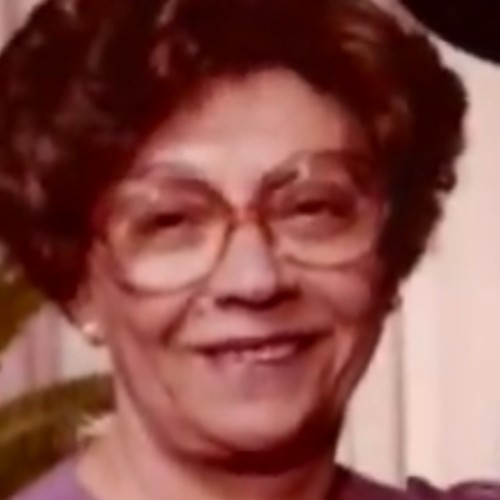
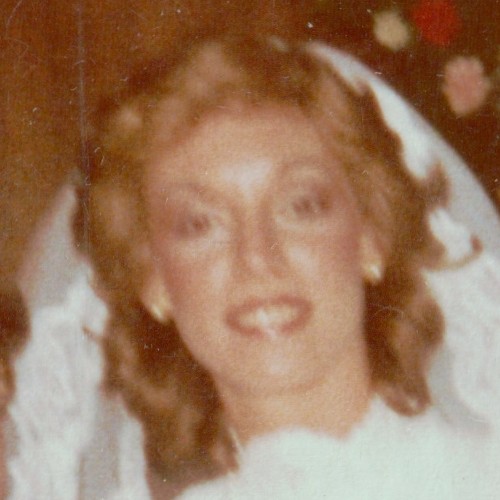
Irene Weisz — known to all her descendants as Bobby — was born on 2 April 1924 in Apagy, Hungary, the youngest child and only daughter of Lipot Weisz and Regina Feldman. Her Hebrew name is Chaya bas Aryeh Rephael HaKohen — Chaya, daughter of Aryeh Rephael the Kohen — bearing forward in her name the priestly designation that came down through her father from her grandfather Samuel and her great-grandfather Lebli. She was a Bas Kohen, born into a household where the kehunah was a daily fact and Friday-night kiddush was made on a becher Samuel's father had used.
She grew up in Apagy, in a house across the street from her uncle Ignácz Feldman's household — her mother Regina's brother — in the close cousin-marriage pattern that defined this generation of the family. (Her parents Lipot and Regina were themselves first cousins through the Grósz hinge — see Chapter Two for the full story.) Bobby had four older brothers, including Imre (b. 1921), who would later be known to her children as "Feter Isaac." Bobby was the only daughter.
In May 1944, when Bobby was twenty, the family was deported. The exact details of those days — the Apagy ghetto, the cattle car, the Auschwitz ramp — Bobby would carry but not often speak. Her mother Regina was murdered at Auschwitz. Her father Lipot was selected for labor at the ramp, transferred onward through the camp system into the Mauthausen subcamp at Ebensee, where he died on 17 February 1945 — eighty days before the camp was liberated by American forces. Of Bobby's four brothers, three were murdered. Imre survived through the munkaszolgálat, the Hungarian forced-labor service. Bobby herself was selected for labor at the ramp and survived. She was moved through the camp system to a women's labor camp and ended the war at Bergen-Belsen, where British forces liberated her on 15 April 1945.
After liberation she was evacuated to Sweden on Count Bernadotte's White Buses — the Swedish Red Cross rescue operation that brought thousands of survivors out of the camps — and she spent the next nearly five years recovering there. Across those years, packages arrived in Sweden from Chicago: from her aunt Esther — who had emigrated in 1939 with her first husband Jack Fogel three weeks before the Nazi invasion of Poland sealed off the door behind her — sending what she could from the South Side. The packages were the lifeline. Esther's 2026 daughter, Sandra, would later remember her mother's constant work assembling them.
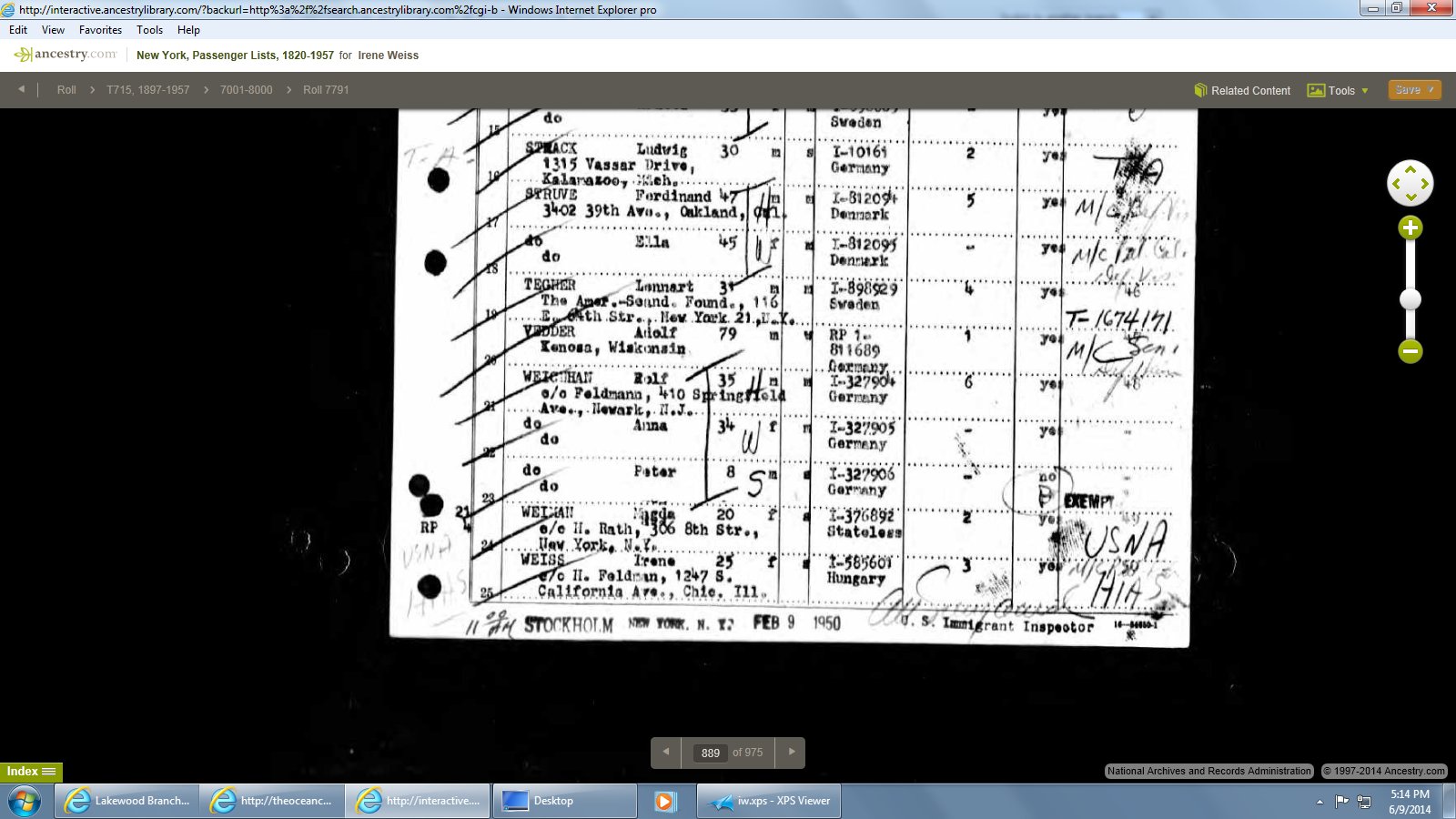
On 9 February 1950, Bobby arrived in New York on the SS Stockholm from Sweden, on a DP Act visa (I-585601), sponsored by HIAS and USNA. The paperwork had been filed by her uncle Hymie Feldman from Chicago. Hymie had arranged everything: someone met her at the New York pier, put her on the train west. When the train pulled into Chicago, Hymie was waiting on the platform. He drove her not to his own apartment but across the city to her aunt Esther's house at 9044 South Merrill Avenue, on the far South Side. Bobby was twenty-six. Three-year-old Sandra was waiting in the house.
She lived in Chicago for two years — first with her aunt Sarah Szerena and Hymie Feldman at 1247 S. California Avenue on the West Side, then with Aunt Esther at the Schon house on the South Side. In February 1952 she moved to New York. On 21 August 1952 she married Laci Klein — a fellow Hungarian survivor who had registered on his American paperwork as Sam Feig — in Brooklyn. Their first home was above the Kerestir shteibel on Eastern Parkway in Crown Heights. Later they moved to 1180 President Street, Brooklyn, where Bobby would live for the rest of her life.
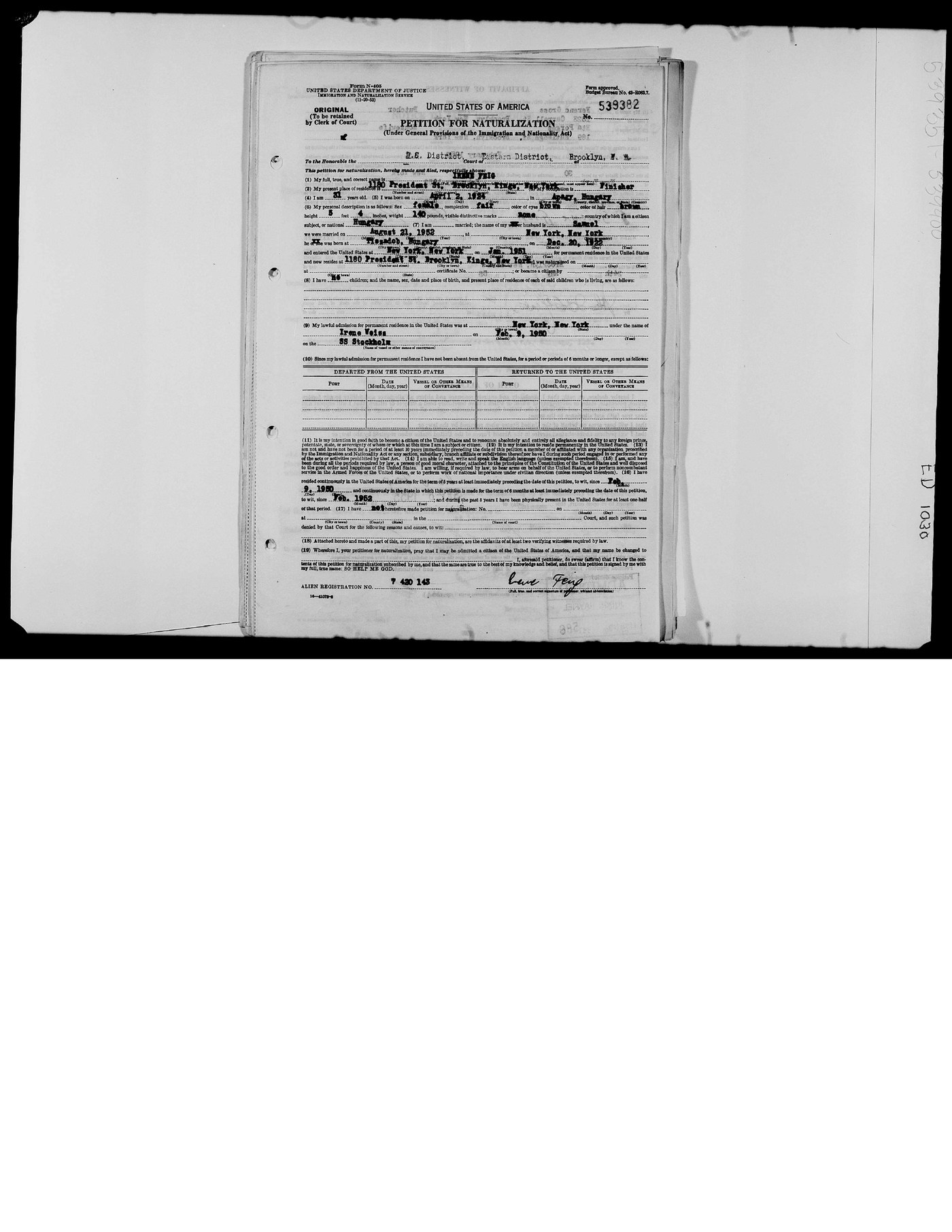
She worked as a Finisher in the Brooklyn garment trade. She naturalized on 8 September 1955 in Brooklyn — Certificate № 7510921, Petition № 539382. Bobby and Laci had two children together — Menachem (Tatty) and Rivka. Laci predeceased her in 1990. Bobby lived on for another twenty-three years, the family's anchor and its memory. She died on 17 April 2013 — 7 Iyar 5773 — in Brooklyn, age 89.
In 2014, the year after Bobby died, her daughter Rivka recorded a long interview with Sandra in Chicago — the cousin she had first met as a baby in Esther's house in February 1950. Sandra would call this the moment the two halves of the Weisz family — the Chicago side that had crossed in 1923 and 1939, and the Brooklyn side that had crossed in 1950 — formally re-joined themselves to each other. The bridge had a name. It was Bobby.
She spent the next five years recovering in Sweden, and in February 1950 a ship called the SS Stockholm brought her to New York. Her aunt Esther — who had been mailing her packages from Chicago all through the war — was waiting. Two years later, in Brooklyn, she married Laci Klein, the Kohen who had survived Tiszadob, and they raised two children: Menachem and Rivka.
She is the one this archive keeps returning to. Everything past 1944 in this family starts with the fact that she made it home.
Eighty-nine years lived. Eight generations back to Lebli. Four brothers — three murdered. The only daughter. Two children. Thirteen grandchildren. And one year, 1944, that she came home from.
Everything past this point on this page begins with the fact that the daughter of Apagy survived the cattle car.
Apagy sat about fifty kilometers south-southwest of Tiszadob, in the Nyírség — a flat plain of yellow sand, acacia groves, tobacco fields, and apple orchards that the novelist Gyula Krúdy called the yellow dusty Nyírség. The village lay seventeen kilometers east of Nyíregyháza, the county seat; in 1904 the opening of the Vásárosnamény–Nyíregyháza railway had given it a station and a small commercial economy.
Irene was the middle child and only daughter of Lipot and Regina. Imre was three years older. Three younger brothers followed: Endre (Chaim Shalom), Erno (Eliyahu), and Jenő (Shlomo Yehuda). The family lived in the same building as her father’s general store — the store sold every kind of food — near the railway station; travelers passing through used to stop by, and Regina would serve them meals. Beyond the store, Lipot worked as a middleman, shipping trainloads of potatoes from local farmers to the cities.Lipot and Regina were themselves first cousins — her mother Miriam Grósz and his mother Roza Grósz were sisters. Bobby grew up across the street from her uncle Ignácz Feldman’s household — the close cousin-marriage pattern that defined this generation of the family. The Grósz hinge runs through the whole 1922 Apagy household.
The house had no running water, no electricity, no central heating, no telephone. They pumped water from a well and heated it on a wood stove. In winter they warmed the beds with hot stones and slept under thick down covers. Perishables sat in a dug-out pit in the basement under hay and a slab of ice that lasted a long time underground.
Thursday was baking day. Regina baked challah, babka, and cheesecakes — there were no bakeries in Apagy; every loaf came from a home oven. Her cousins the Feldmans lived directly across the street — the children of Regina’s brother Ignácz Feldman. On Shabbos afternoons the two families spread cloths on the big backyard lawn and shmoozed. Her grandmother Miriam Grósz Feldman — “Mali Néni” — lived with them and shared Bobby’s bed.Mali Néni shared Bobby’s bed from her earliest years until 1944. The bond of the youngest child and the oldest woman of the house. Both were murdered together at Auschwitz that summer.
There was no Bais Yaakov in Apagy, so Bobby attended the public school: 8:00 to 1:00; the boys then went to cheder from 2:00 until 7:00. She was popular at recess because she filled her pockets with chocolates and candies from her father’s store to share with her friends. Her older brother Imre was sent to live with his grandparents Samuel and Roza in Nyírbogát, where the Jewish community was larger. Every Sunday the family hired a horse and buggy to ride to Nyírbogát to see him.
The sukkah was built inside the house. Later, as antisemitism rose, they moved it behind the house — less visible from the street. Up to 1933 everything was fine with the non-Jewish villagers. After 1933, people started saying, “Hitler is coming — go to Palestine.” Things got harder beginning in 1938 with the first of Hungary’s anti-Jewish laws. By 1941 the young men, including Imre, were being marched into Hungarian forced-labor battalions. The Hungarian government had banned Jews from meat. The family made falsche fisch — false fish — from whatever they could.
The Germans did not come to deport the Jews of Apagy until 1944. Shortly after Pesach that year the family was moved to a ghetto. Around Shavuos they were forced into cattle cars and sent to Auschwitz-Birkenau.Shavuos 1944 fell on 28 May. The cattle car was real and overcrowded; the next time the family was outside again was the Birkenau ramp at the end of a three-day journey. The exact details of those days — the Apagy ghetto, the cattle car, the Auschwitz ramp — Bobby would carry but not often speak.
On arrival at Birkenau, Bobby saw her grandmother — the grandmother she had shared a bed with, too weak to step down quickly enough — and her uncle Ignácz Feldman, the grandmother’s son, who reached up to help her, shot in front of her by a Nazi guard. Her mother Regina was murdered at Auschwitz. Her father Lipot was selected for labor at the ramp and transferred onward through the camp system into the Mauthausen subcamp at Ebensee, where he died on 17 February 1945 — eighty days before the camp was liberated by American forces. Of her four brothers, three were murdered. Imre survived through the Hungarian munkaszolgálat.
In the winter of 1944–45, as Soviet forces pressed westward, she was evacuated on foot through the Sudetenland and arrived eventually at Bergen-Belsen, where British forces liberated her on 15 April 1945. By liberation she was so reduced that the Allied soldiers who opened the barracks had placed her among the dead, and only realized otherwise when they noticed her moving.
From Bergen-Belsen, when she was strong enough to move, she was evacuated to Sweden on Count Folke Bernadotte’s White Buses — the Swedish Red Cross operation that began the very day of liberation and brought approximately ten thousand mostly Hungarian-Jewish young women out of Bergen-Belsen to neutral Sweden. She lived there for five years, together with other girls who had lost their families.Painted white with a red cross so Allied planes wouldn’t fire on them. Folke Bernadotte was assassinated three years later, in 1948, while mediating in Jerusalem.
Bobby was twenty-six. Three-year-old Sandra was waiting in the house. The night Bobby arrived, every Feldman and Weisz cousin in Chicago came over. The entire night was conducted in Hungarian, because that was the language Bobby still thought in. The girl from Apagy who had walked out of a Bavarian camp was sitting in a Chicago living room hearing the language of her childhood from people who had been waiting for her for fifteen years.
But Chicago, to Bobby, felt like a place where Shabbos was fading. The community was drifting. When an introduction was made to a young man who did not keep Shabbos, she declined. She went to New York for a friend’s wedding — and decided to stay. Her naturalization petition would later record the move precisely: continuous New York State residence from February 1952.
One day, walking down Lee Avenue in Williamsburg, she looked into a butcher shop window and saw a cousin of hers — a Grósz, Menachem said in the interview — working behind the counter. She had no idea he was in New York. She went inside. It was a reunion. He was her only relative in the city she had known about, and after that day they were very close.
On 21 August 1952, in Brooklyn, she married Laci Klein — Sam “Laci” Feig, Mordechai Elazar HaKohen, the Kohen of Tiszadob who had survived Auschwitz. A fellow Hungarian survivor who had registered on his American paperwork as Sam Feig. The Kerestir Rebbe — of the Hasidic dynasty descended from Reb Shayele of Kerestir — was their mesader kedushin. The wedding was attended by her great-uncle Simon Grósz, who at seventy-four had traveled from Selma, Alabama — the first member of this family to reach America, present at the wedding that founded its new Brooklyn family.Reb Shayele Steiner of Kerestir (1851–1925) was the Hasidic rebbe whose tomb in Hungary remains one of the most-visited Jewish pilgrimage sites in the world.
The chuppah that continued both broken lines — Tiszadob in Laci, Apagy in Bobby, the rupture itself in the wedding that began a third.
After the wedding they paid the caterer by opening the gift envelopes one by one. A well-to-do uncle offered to set them up in business in Chicago, near family — an easier life. They declined. The Yiddishkeit, they felt, would be lost. Better to stay poor in Brooklyn where their children could grow up religious.
Their first home was the apartment above the Kerestir shteibel on Eastern Parkway. They later moved to 1180 President Street, the Crown Heights brownstone on every form they ever signed. She worked as a finisher in the Brooklyn garment trade — the woman who closed the seams. She was naturalized on 8 September 1955, Cert. No. 7510921.
After the war, when her brother Imre finally did return to their old house in Apagy, the principal of the public school — a friend he had known before the war — came by to try to befriend the family again. Imre wasn’t interested. Neither was Bobby.
Laci predeceased her in 1990. Bobby lived on for another twenty-three years — the family’s anchor and its memory. She died in Brooklyn in 2013, at eighty-nine, having raised a family whose children and grandchildren live the life she chose to stay for.
Of all the people in this archive, Bobby is the one everyone who is alive today remembers best. She is the person this family is closest to. Everything on this page that comes after 1944 starts with her survival.
Family photographs spanning sixty years — from the 1922 Apagy picture she carried with her, to the three–generation gathering at Long Beach in 1990.
Built by Eli Feig for the family. The Klein × Weisz Archive is a multi-generational record of two Hungarian Jewish lines, joined by Bobby and Laci’s marriage in 1952, and a tribute to those murdered in the Shoah.
Bobby herself was selected for labor and survived. She spent the next year in the camp system — from Auschwitz assigned to a women's labor camp (likely a Gross-Rosen, Flossenbürg, or Ravensbrück subcamp; the exact location is not yet documented). By the end she weighed seventy pounds. A guard's dog bit her foot while she searched garbage for potato peels, and the infection lasted months.
Across those years, packages arrived in Sweden from Chicago: from her aunt Esther, who had emigrated in 1939 with her first husband Jack Fogel three weeks before the Nazi invasion of Poland sealed off the door behind her. Clothing in winter, food when food was uncertain, money to buy what couldn’t be requested, letters with news of cousins who had survived. Esther sent what she could from the South Side; her older sister Sarah Szerena (married to Hymie Feldman) sent her own packages from the West Side. Esther’s daughter Sandra, then a small child, would later remember her mother’s constant work assembling them — wrapping, addressing, mailing, week after week, for years.
Bobby on Hungary, recounted by her son Menachem in 2014: "She had no desire, ever, to return to Hungary. A murderous country, where the goyim murdered our people."