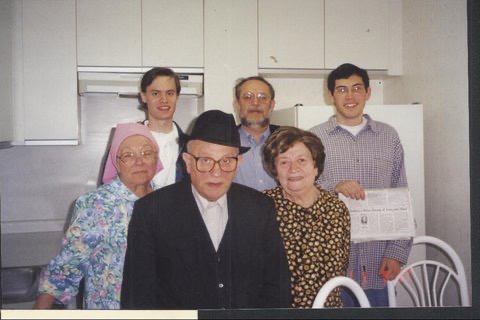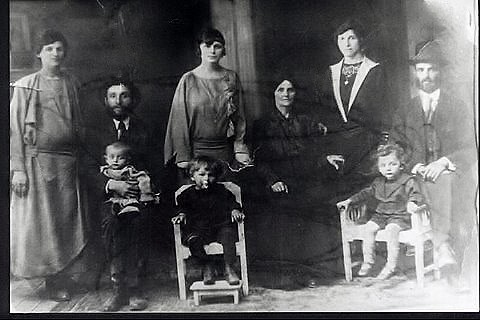
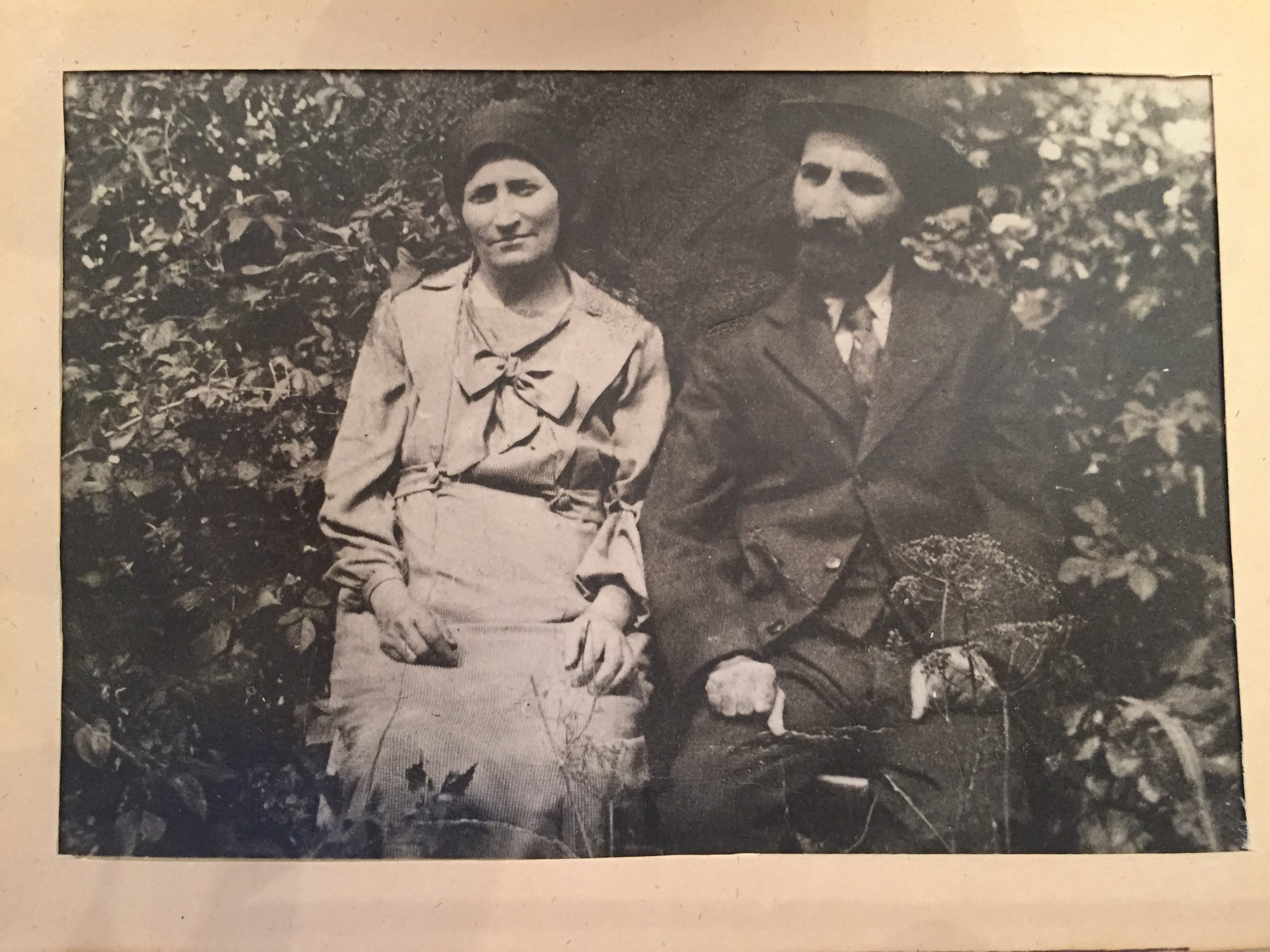
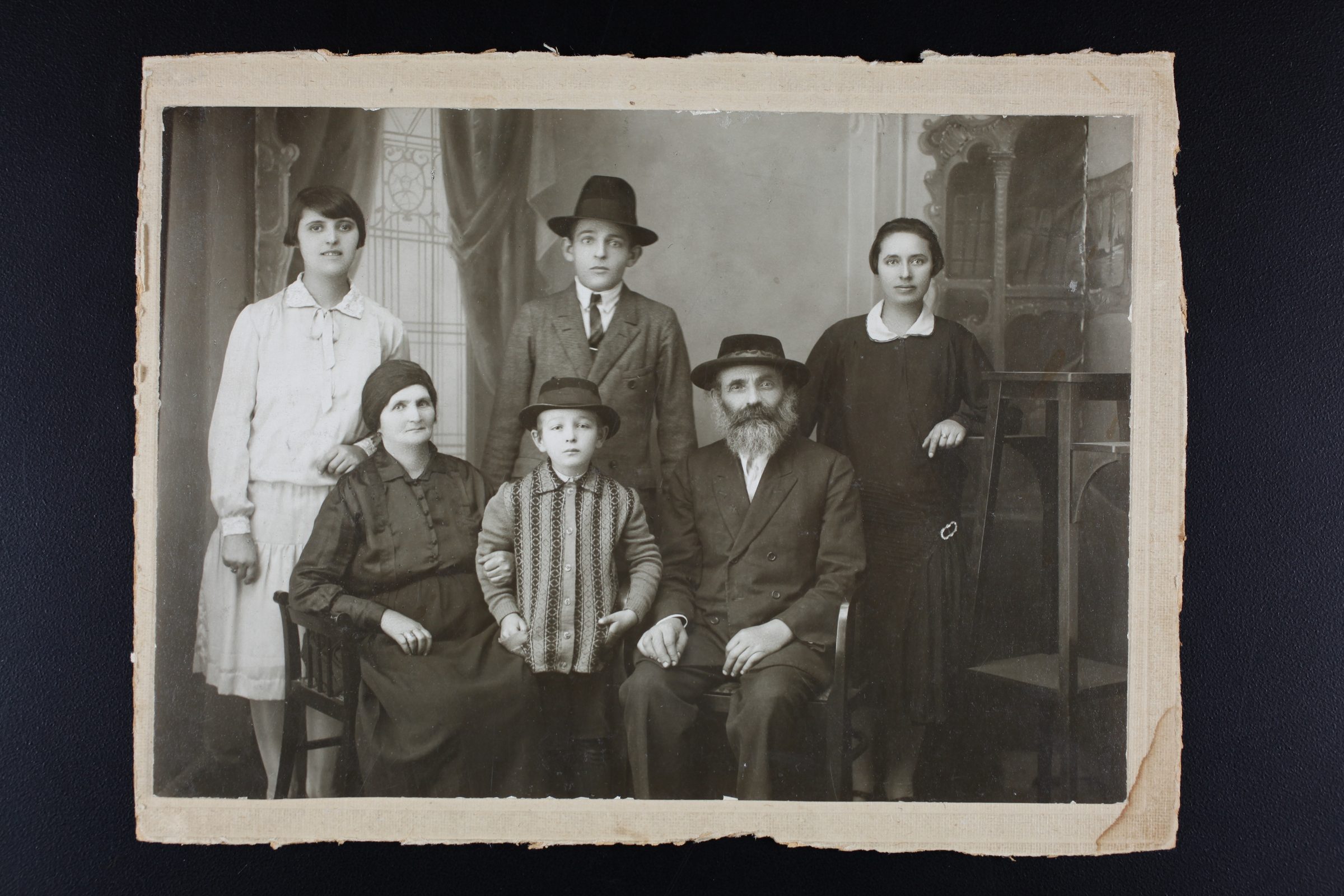
✦ ✦ ✦

The Feig Family

KLEIN OF TISZADOB × WEISZ OF APAGY

A TREE IN PROGRESS

What we know, what we're searching for, and the lives behind the dates — drawn from Yad Vashem, Ancestry, a 2014 interview with Menachem Feig (legal name Marvin) about his mother Irene, and family memory.

TISZADOB APAGY NYÍRBOGÁT JÁKÓ PETNEHÁZA NYÍREGYHÁZA

VERSION 3 · APRIL 2026

— I —

The Tree

Two lines that meet in Brooklyn

THE KLEIN LINE

Klein of Tiszadob

Szabolcs-Szatmár-Bereg County, Hungary

GREAT-GREAT-GRANDPARENTS
József Klein · TISZADOB ·
×
Dinko Schoenberg likely Dincha / Dina · TISZADOB ·
Péter Goldstein · TISZADOB ·
×
Róza Krausz · TISZADOB ·
GREAT-GRANDPARENTS
Emanuel Klein B. 1887 TISZADOB · MURDERED 1944 Yad Vashem status: "missing"
×
Lina Klein née Goldstein B. 1879 TISZADOB · MURDERED 1944 had Laci at 43 yrs old
— LINA'S SISTER —
Gizella Goldstein m. Ferenc Büchler B. 1885
GRANDFATHER & HIS SIBLINGS
Ilona Klein B. 1912 · AUSCHWITZ APR 1944 eldest — age 32
Jenő Klein "Jenő bácsi" B. 27 SEP 1913 · SURVIVED liberated Theresienstadt
THE WEISZ LINE

Weisz of Nyírbogát → Apagy

Szabolcs-Szatmár-Bereg County, Hungary

3RD GREAT-GRANDPARENTS (PATERNAL)
Leopold Abraham Weisz "Lebli" B. 1835
×
Pepi Pessil Schvarcz also Schwarcz / Schvartz 1835 – 22 JUL 1915
3RD GREAT-GRANDPARENTS (MATERNAL)
×
GREAT-GREAT-GRANDPARENTS
Simon Weisz Shaul / Samuel 17 NOV 1860 – 1940 Petneháza → Nyírbogát
×
Elias Feldman B. 1860 Jákó, Szabolcs
×
GREAT-GRANDPARENTS
Leopold "Lipat" Weisz likely Yehuda Leib 24 MAR 1892 NYÍRBOGÁT D. 17 FEB 1945 · KZ EBENSEE
×
Regina Feldman Rivke 31 AUG 1892 JÁKÓ · D. 1944
◆ first cousins through the Grósz line · both born 1892 ◆
GRANDMOTHER & HER SIBLINGS
Imre Weisz Weiss 19 AUG 1921 · D. 24 AUG 2001 BROOKLYN survived · left Hungary after 1956 revolution
— IRENE'S THREE BROTHERS · MURDERED 1944 —
Endre Weisz Chaim Shalom MURDERED 1944
Erno Weisz Eliyahu ("Elye") MURDERED 1944
Jeno Weisz Shlomo Yehuda ("Slome Yide") MURDERED 1944
MURDERED IN HOLOCAUST · ז״ל
DIED IN CAMP
SURVIVED THE WAR
DIED BEFORE THE WAR
INFANT LOSS
LIVING
UNKNOWN
— THE MARRIAGE —
BROOKLYN, EARLY 1950s
Laci Klein Mordechai Feig 1922 – 1990
×
Irene Weisz Irene Feig 1924 – 2013
— THEIR CHILDREN —
Rivka Feig Rivka Rochel · "Rena" · m. R' Laibe Schwartz 4 DEC 1956 NYC · D. DEC 2024 (67)
Menachem Feig legal name Marvin B. 4 OCT 1957 · NYC m. Fruma
— RIVKA & R' LAIBE SCHWARTZ'S SEVEN CHILDREN —
Mrs. Miriam Horowitz daughter
Mrs. Blimi Klein daughter
R' Aryeh Schwartz son
R' Moshe Schwartz son
R' Menachem Schwartz son
R' Mordechai Schwartz son
R' Pinchus Schwartz son
— MENACHEM & FRUMA'S SIX CHILDREN —
Yitzchak Yosef Feig eldest
Yehudah Leib Feig 2nd
Mordechai Feig 4th
Michal Feig 5th · interviewed Menachem in 2014
Aryeh Feig youngest
— II —

Beyond the Tree

Weisz & Grósz ancestry going back to the early 1800s

Ancestry records on the Weisz side reach two more generations past Simon — into people born in the first half of the 19th century, whose grandchildren would build the Nyírbogát household.

The Paternal Weisz Line

Ascending from Simon Weisz → his parents → their parents

SIMON'S PARENTS · 3RD GREAT-GRANDPARENTS
Leopold Abraham Weisz "Lebli" B. 1835 · PETNEHÁZA
×
Pepi Pessil Schvarcz also Schwarcz / Schvartz 1835 – 22 JUL 1915 NYÍRBOGÁT
LEOPOLD A.'S PARENTS · 4TH GREAT-GRANDPARENTS
Martony Weisz dates unknown
×
Sali Krausz dates unknown
PEPI'S PARENTS · 4TH GREAT-GRANDPARENTS
names not yet recovered Schvarcz family · Petneháza area

The Maternal Grósz & Berger Lines

Parents of Ferencz & Hani — the source of the cousins' connection

THE SHARED ANCESTORS · 3RD GREAT-GRANDPARENTS
Ferencz Z. Grósz 1845 – 1922 (77)
×
Hani Berger 1844 – 1894 (50)
parents of Miriam & Rozalia Grósz — the two sisters
FERENCZ'S PARENTS · 4TH GREAT-GRANDPARENTS
Samuel Moshe Grósz dates unknown
×
Mihatz Grósz also rendered Mihaly dates unknown
HANI'S PARENTS · 4TH GREAT-GRANDPARENTS
Aaron Berger dates unknown
×
Rakhel Kepes Berger dates unknown

Hani Berger died in 1894 at fifty, when her daughter Rozalia was twenty-three. She never met her grandson Lipat, who would have been two years old. Ferencz Grósz lived another twenty-eight years after her, dying in 1922 — old enough to have known a young Laci and Irene's world, even if they did not yet know him.

— III —

The Story

What we know of the lives themselves

· CHAPTER ONE ·

Zeidy — Laci of Tiszadob, Mordechai of Brooklyn

Born Christmas Day, 1922. Last son of a household that did not survive.

Laci Klein — Mordechai Feig — Zeidy
— ZEIDY —
Laci · Mordechai
1922–1990

Tiszadob sits on the upper Tisza river in Szabolcs-Szatmár-Bereg county, in northeastern Hungary. The land around it is damp and green where the river floods, dotted with willows and acacia; at the western edge of the village stands the Andrássy Castle, built in the 1880s by Count Gyula Andrássy — the first foreign minister of the Austro-Hungarian Empire — a neo-Gothic silhouette with a boxwood labyrinth and an English garden that any Jewish child in the village would have known as simply the kastély. About three thousand people lived in Tiszadob in the early twentieth century; at its peak the Jewish community numbered about a hundred, Orthodox, tied to the rabbinical world of Nagykálló and the Satmar Hasidic courts. This was Lina Klein's village and Emanuel Klein's village, and it was the village their youngest son Laci was born into on 25 December 1922.

When Lina gave birth to him that winter, she was forty-three. Her husband Emanuel was thirty-five. Their first child Ilona was already ten, their second son Jenő was nine. The gap between Jenő and the new baby was a long nine years with no other children in between — just a long pause.

At the Shabbos table in Tiszadob, Lina called him Laci — the Hungarian diminutive of László, which itself was the civil form of his Hebrew name, Eliezer. His full Hebrew name was Mordechai Eliezer. His older brother Jenő was Jenő bácsi to the family that would come after. His older sister Ilona turned thirty-two in the spring of 1944.

Of the four people in the Klein household in May 1944, two survived. Laci — twenty-one that spring, prime age for a Hungarian labor battalion call-up — and Jenő, thirty-one, who would end the war at Theresienstadt. Emanuel was fifty-seven. Lina was sixty-five. Ilona was thirty-two. None of them saw the summer.

We honor our loved ones resting here. — Tiszadob cemetery memorial, sponsored jointly by Laci and Jenő Klein

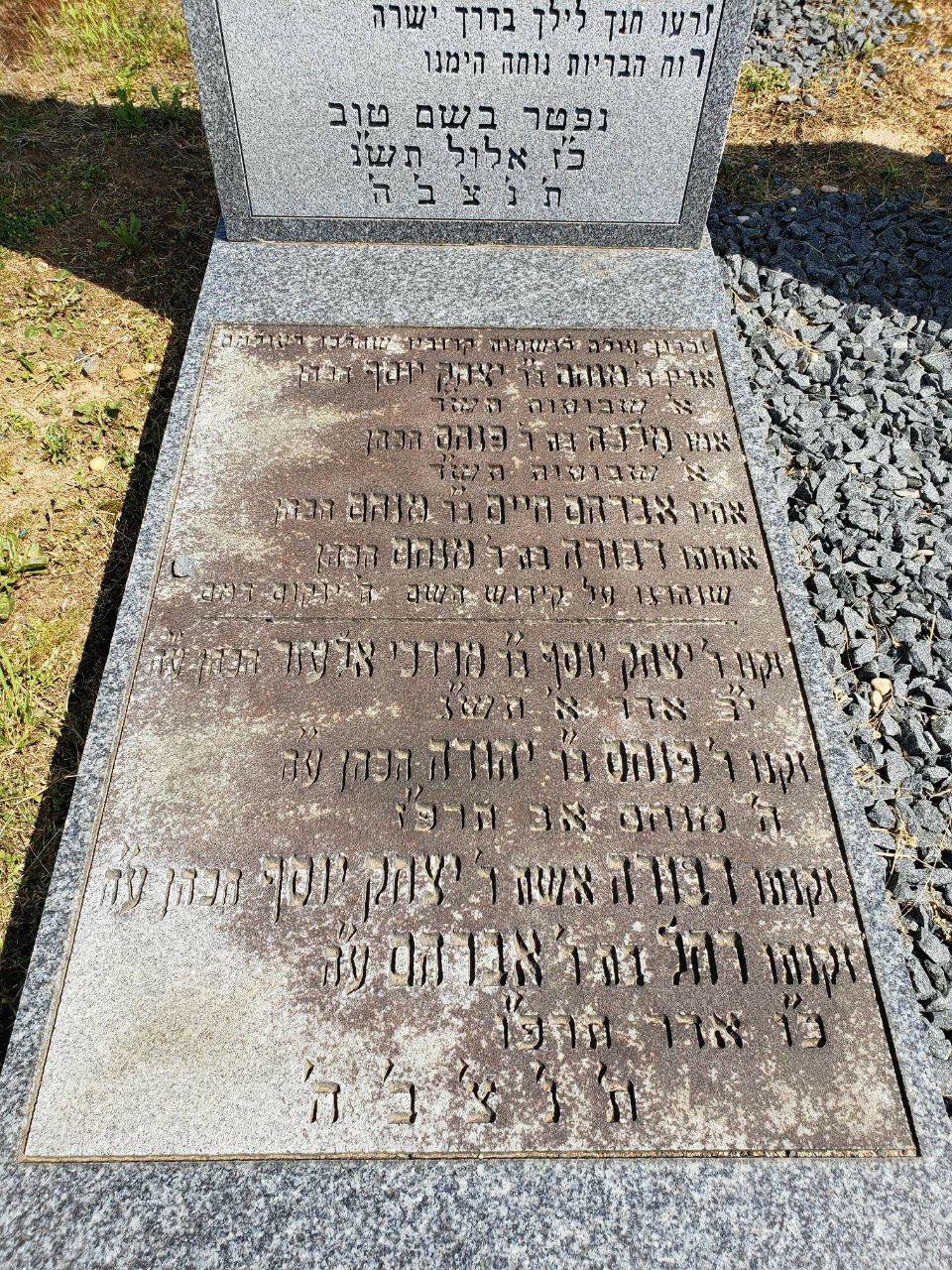
Two brothers came back. They came back to the village, or they sent money for someone else to return, and together they paid for a memorial stone in the Tiszadob cemetery. That inscription is one of the few physical traces left of the household they grew up in. Everything else was taken.

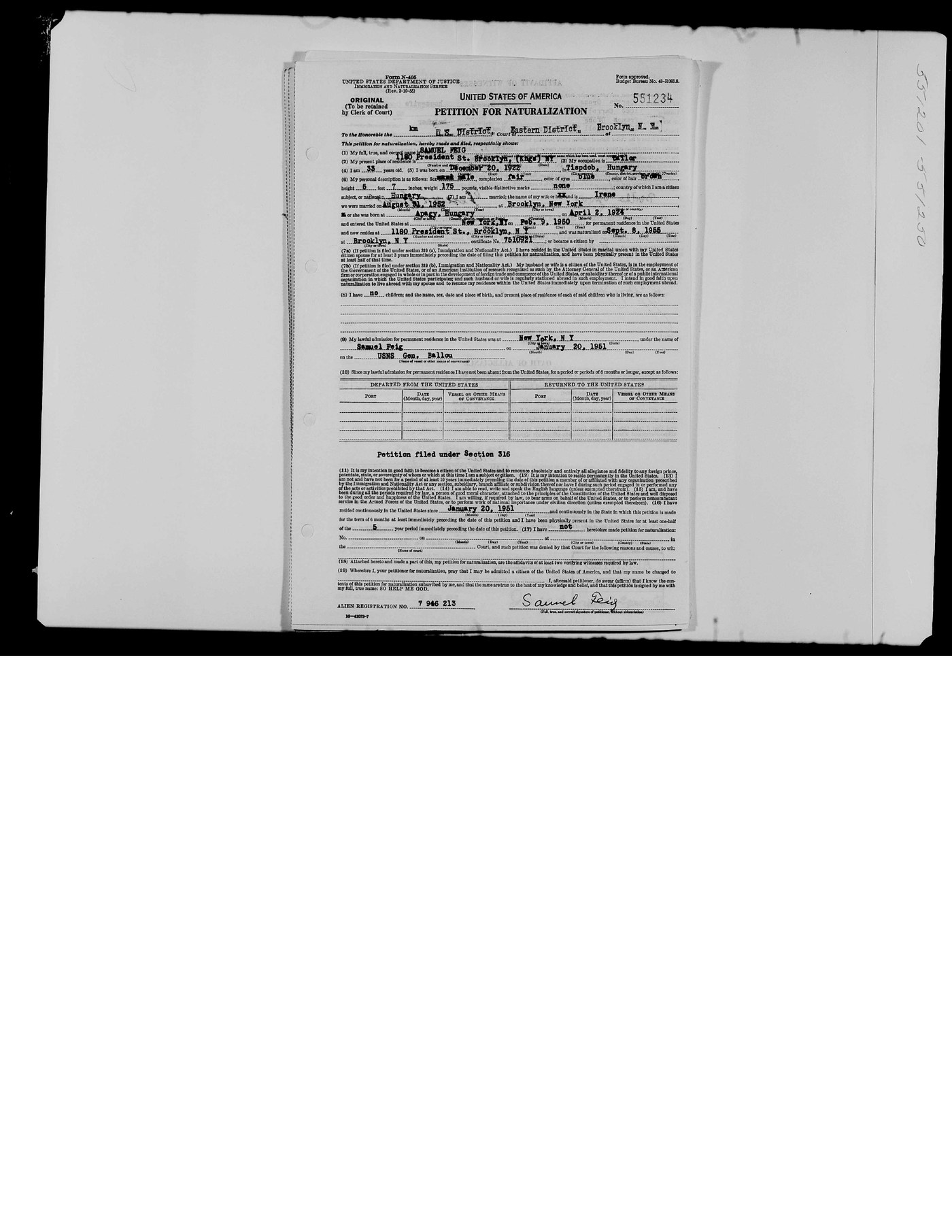
Laci made his way to America. When he presented his landing papers at the reception station — HIAS desks at Castle Garden, at the Marseilles Hotel near the piers, or inside a curtained Ellis Island annex — a clerk heard his name. Somehow — and this has always been the family's clearest story — "Klein" on the page became "Feig." Whether the clerk read it off a misread manifest, mistranscribed a Hungarian-accented answer, or confused Laci's paper with the next man's in line, no one now knows. In that second, a name that had belonged to his father and his grandfather in Tiszadob for a hundred years ceased to be his legal name in America.

He lived for forty more years under the name the paperwork gave him.

In the early 1950s he married Irene Weisz, a girl from Apagy, a village forty miles from Tiszadob. He died in September 1990, aged sixty-seven, in Brooklyn.

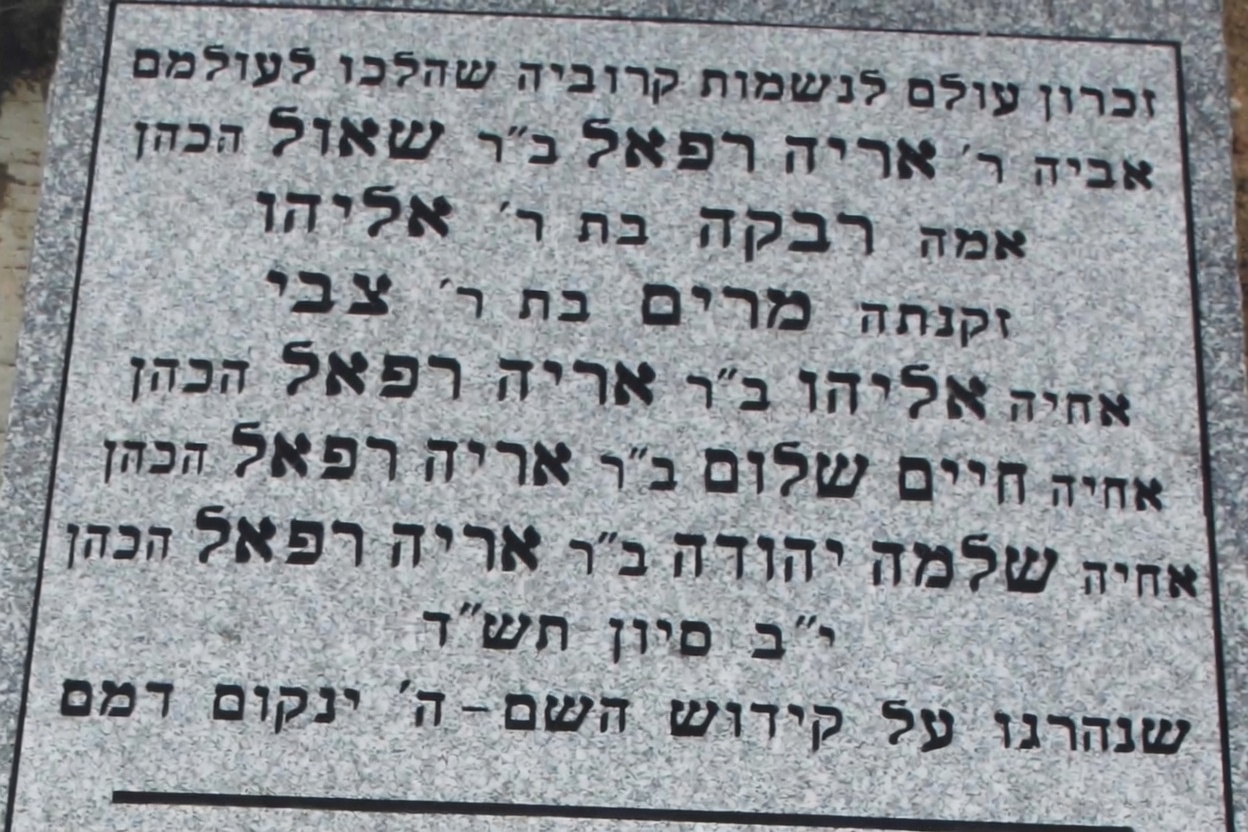
Tiszadob cemetery memorial plaque — names of the Klein family lost and commemorated
— TISZADOB CEMETERY MEMORIAL —

"Tiszteljük az itt nyugvó szeretteinket"

We honor our loved ones resting here.

The plaque bears five names. Three are family: Büchler Lajos (Ilona Klein's husband), Klein Jenő (Laci's brother), and Klein Laci. The other two — Kohn Icu and Kohn Ilus — are presumed unrelated to the Klein family.

· CHAPTER TWO ·

Bobby — Irene of Apagy

Born 2 April 1924. The heart of this family — the one everyone was closest to. What she told her son, in her own words, in 2014.

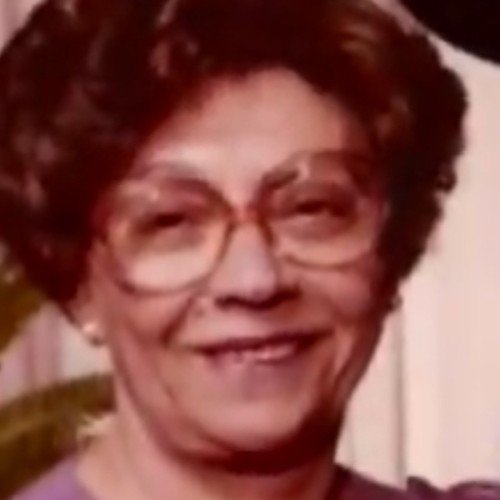
Irene Weisz — Feig — Bobby
— BOBBY —
Irene · Weisz
1924–2013

In 2014, Menachem's daughter Michal sat her father down and asked him to tell the story of his mother's life. What follows comes almost entirely from that recording — Irene's own childhood and young womanhood, as she told it to her son, and as he told it to his daughter. The memories she carried from Apagy were, as Menachem put it, always very positive. Life was very peaceful. They used to say family was always together.
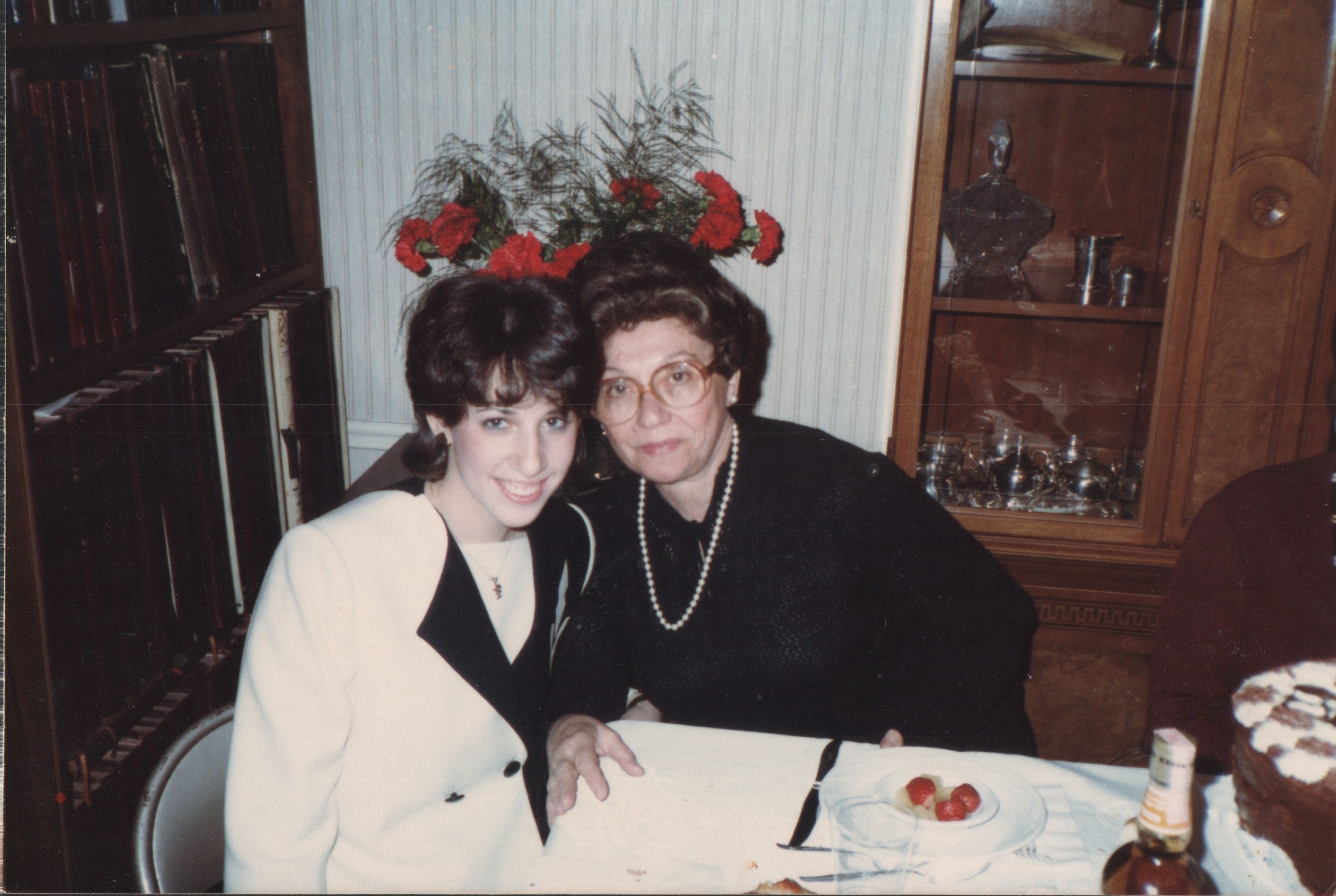
Apagy sat about fifty kilometers south-southwest of Tiszadob, in the Nyírség — a flat plain of yellow sand, acacia groves, tobacco fields, and apple orchards that the novelist Gyula Krúdy called the yellow dusty Nyírség. The village lay seventeen kilometers east of Nyíregyháza, the county seat, and in 1904 the opening of the Vásárosnamény–Nyíregyháza railway had given it a station and a small commercial economy. About 2,400 people lived there in the 1930s; the Jewish community peaked at around 160 — roughly thirteen percent of the village — and had declined to ninety-two on the eve of 1944. Like Tiszadob it was Orthodox and Chassidic-touched; the tomb of the Kállói Rebbe at Nagykálló, fifteen kilometers south, was the spiritual magnet of the whole district.

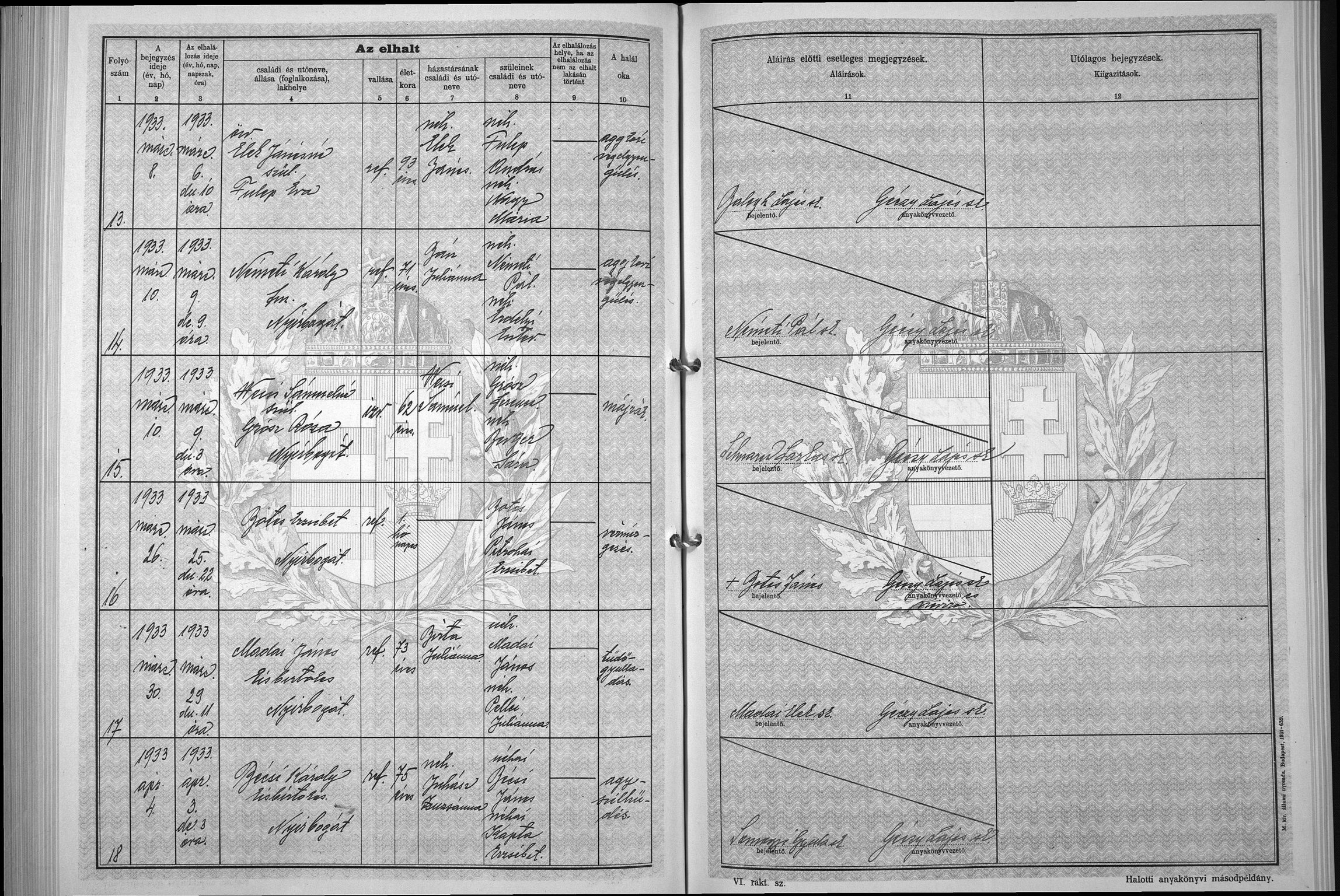
Irene was born in Apagy on 2 April 1924, the middle child and only daughter of Lipat and Regina. Her older brother Imre was three years older. Three younger brothers followed: Endre (Chaim Shalom), Erno (Eliyahu), and Jeno (Shlomo Yehuda). The family lived in the same building as her father's general store — the store sold every kind of food — and the house was near the railway station; travelers passing through used to stop by, and Irene's mother would serve them meals. Lipat was a middle-class provider. Beyond the store, he worked as a middleman, shipping trainloads of potatoes from local farmers to the cities.

The house had no running water, no electricity, no central heating, no telephone — standard for a Nyírség village at that time. They pumped water from a well and heated it on a wood stove for baths taken in a kitchen tub. In winter they warmed the beds with hot stones and slept under thick down covers. Only one person in the whole town owned a car. If someone needed to receive a phone call, a message arrived from the post office telling them when to come and stand by the line. Perishables sat in a dug-out pit in the basement under hay and a slab of ice that lasted a long time in the cool underground.

Thursday was baking day. Regina baked challah, babka, and cheesecakes — there were no bakeries or takeout in Apagy; every loaf came from a home oven. A Gentile woman came every day to help with the housework; one day a week was laundry. This was standard for a middle-class family in those villages, not a mark of wealth.

Irene's cousins the Feldmans lived directly across the street — the children of Regina's brother (most likely Ignácz Feldman, born 1894). On Shabbos afternoons the two families spread cloths on the big backyard lawn and sat together to shmooze. Relations with the non-Jewish villagers were peaceful; until the war, Menachem said, everything was fine.

Irene's mother Regina was, in her daughter's telling, a tzadeikes — a great cook and baker who always helped the poor. Regina's own mother, Irene's grandmother — a widow — lived with them in the house. Irene shared a bed with her. She gave her mother only the greatest respect, calling her by a name of affection. That grandmother was almost certainly Miriam Grósz Feldman, though the Ancestry records list her dying in 1932 — a date contradicted by the testimony that follows.

There was no Bais Yaakov in Apagy, so Irene attended the public school. She was popular at recess because she filled her pockets with chocolates and candies from her father's store to share with her friends. Everyone wanted to be her friend that way. The rabbi was not Apagy's alone — he cycled between three or four towns, each Shabbos in a different one, and came by every once in a while. Irene's older brother Imre did not stay for school in Apagy; he was sent to live with his grandparents Simon and Rozalia in Nyírbogát, where the Jewish community was larger and the schooling better. Every Sunday the family in Apagy hired a horse and buggy and traveled to Nyírbogát to see Imre and the grandparents together.

The family built their sukkah inside the house. Later, as anti-Semitism rose, they moved the sukkah behind the house — less visible from the street.

By 1941 or 1942 all the young men, including Irene's brother Imre, had been taken to Hungarian forced-labor battalions. The Hungarian government had banned Jews from having meat. The family made falsche fisch — false fish — from whatever they could. The women and the older men and the children were left in the houses. Hungary, by the terms of the war, was still a relatively slow-moving place compared to Poland. The Germans did not come to deport the Jews of Apagy until 1944.

Shortly after Pesach that year the family was moved to a ghetto. Around Shavuos they were forced into cattle cars and sent to Auschwitz-Birkenau. The deportation of Hungarian Jewry, the last great mass killing of the Shoah, took place between 15 May and 9 July 1944; more than four hundred thousand people — Irene and her family among them — were transported in a span of eight weeks.

On arrival at Birkenau, Irene saw her grandmother — the grandmother she had shared a bed with, too weak to step down quickly enough — and her uncle, the grandmother's son, who reached up to help her, shot in front of her by a Nazi guard. The uncle was almost certainly Ignácz Feldman, Regina's brother; Yad Vashem records his death in 1944. Her parents Lipat and Regina, and her three younger brothers Endre, Erno, and Jeno, did not survive the deportations. Her father Lipat was transferred onward through the camp system to KZ Ebensee — a subcamp of Mauthausen in the Austrian Alps, opened in late 1943 for tunneling labor, and one of the final and worst camps in the Mauthausen complex. He died there on 17 February 1945, eighty days before the camp was liberated by American troops on 6 May.

Irene spent the next year in the camp system — Auschwitz and at least one other location where prisoners were kept for forced labor. By the end she weighed seventy pounds. A guard's dog bit her foot while she searched garbage for potato peels, and the infection lasted months. By liberation she was so reduced that the Allied soldiers who opened the barracks had placed her among the dead, and only realized otherwise when they noticed her moving. That discovery saved her life twice over — because other survivors died from eating the first heavy rations their shrunken bodies could not process, and she, in a hospital bed instead of a canteen line, was spared that too.

From the hospital, when she was strong enough, she was sent to Sweden. She lived there for five years, together with other girls who had lost their families. They stayed in a home. People took care of them. The Swedish king and his people, she would say, were very kind. Her older brother Imre — taken to forced labor before the deportations — had survived too, but he had returned to Hungary, married, and was now trapped there: the Russians had closed the borders and he could not leave until the 1956 revolution opened a door.

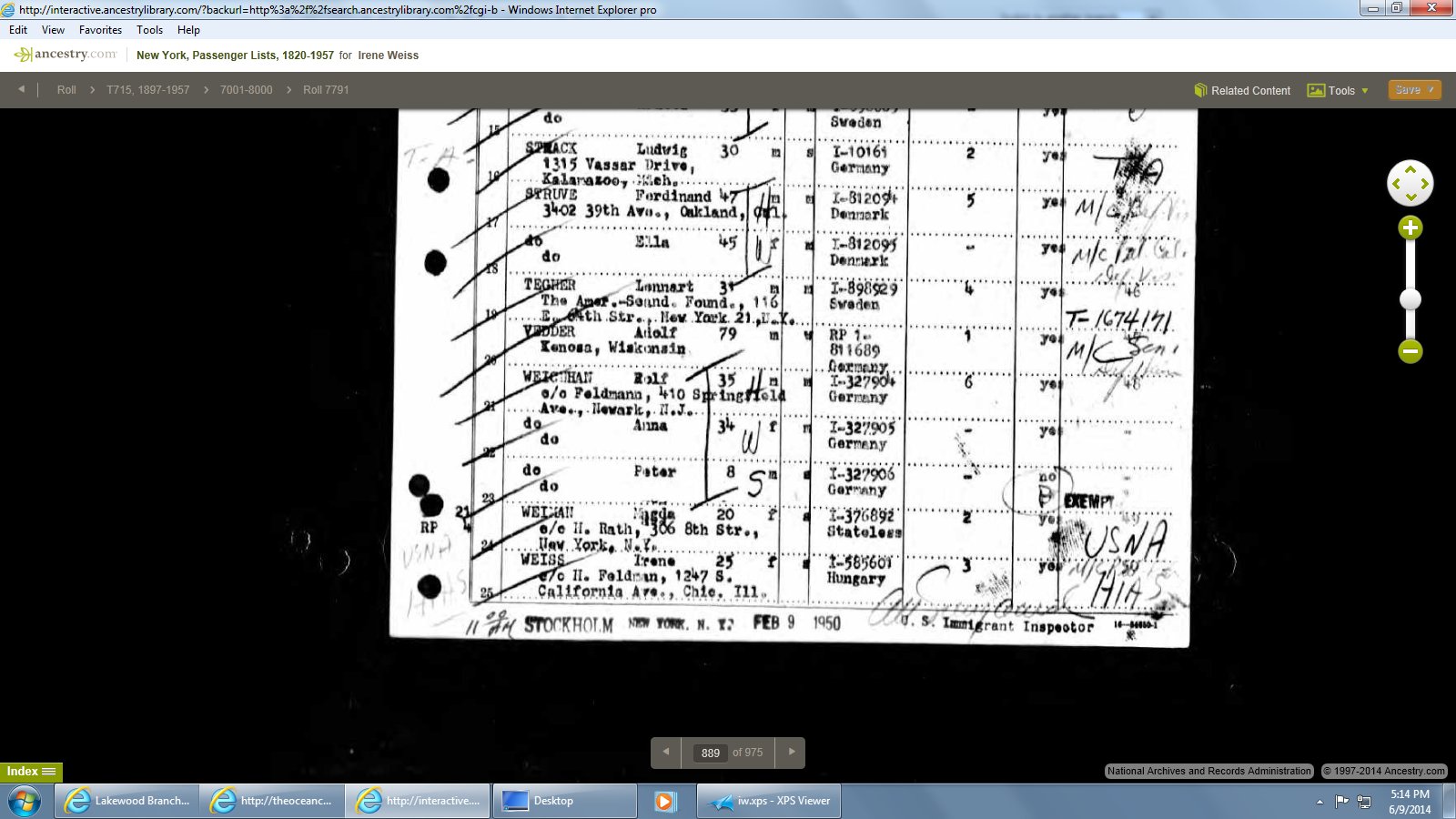
Her father's younger sister Aunt Esther — Simon and Rozalia's eighth child, born 1905 — had gone to America before the war and settled in Chicago. Irene had known her well as a child: Esther had lived in Nyírbogát with the grandparents, and Irene had seen her every Sunday on the horse-and-buggy visits, and Esther had come to Apagy too. In Sweden, Esther found her, and began sending packages of food. Through her Chicago relatives Irene was finally granted a visa, and in 1950, at twenty-six, she took a boat to New York. An uncle's brother-in-law met her at the dock and put her on a train to Chicago. When she arrived, the American cousins — all of whom still spoke Hungarian — made her a big party.

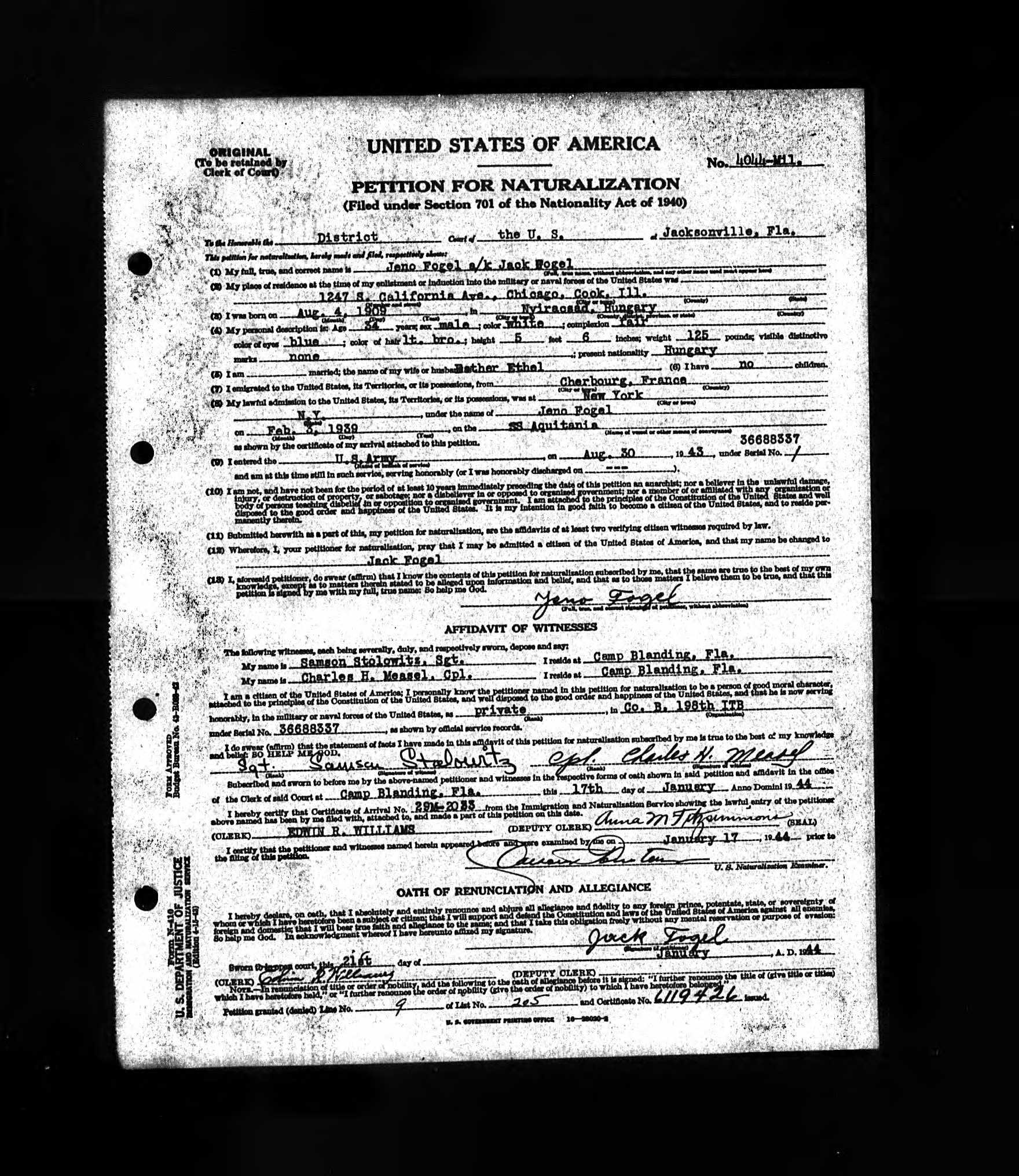
Aunt Esther by then had remarried (her first husband, Jack Yeno Fogel, a Yeshiva bachur, had enlisted in the American army and been killed in France in 1944), and had a baby daughter about one or two years old. Irene stayed with Esther in Chicago. But Chicago, to Irene, felt like a place where Shabbos was fading. The community was drifting. When an introduction was made to a young man who did not keep Shabbos, she declined. She went to New York for a friend's wedding and decided to stay.

Walking down Lee Avenue in Williamsburg one day, she looked into a butcher shop window and saw a cousin of hers — a Grósz, Menachem said in the interview — working behind the counter. She had no idea he was in New York. She went inside. It was a reunion. He was her only relative in the city she had known about, and after that day they were very close.

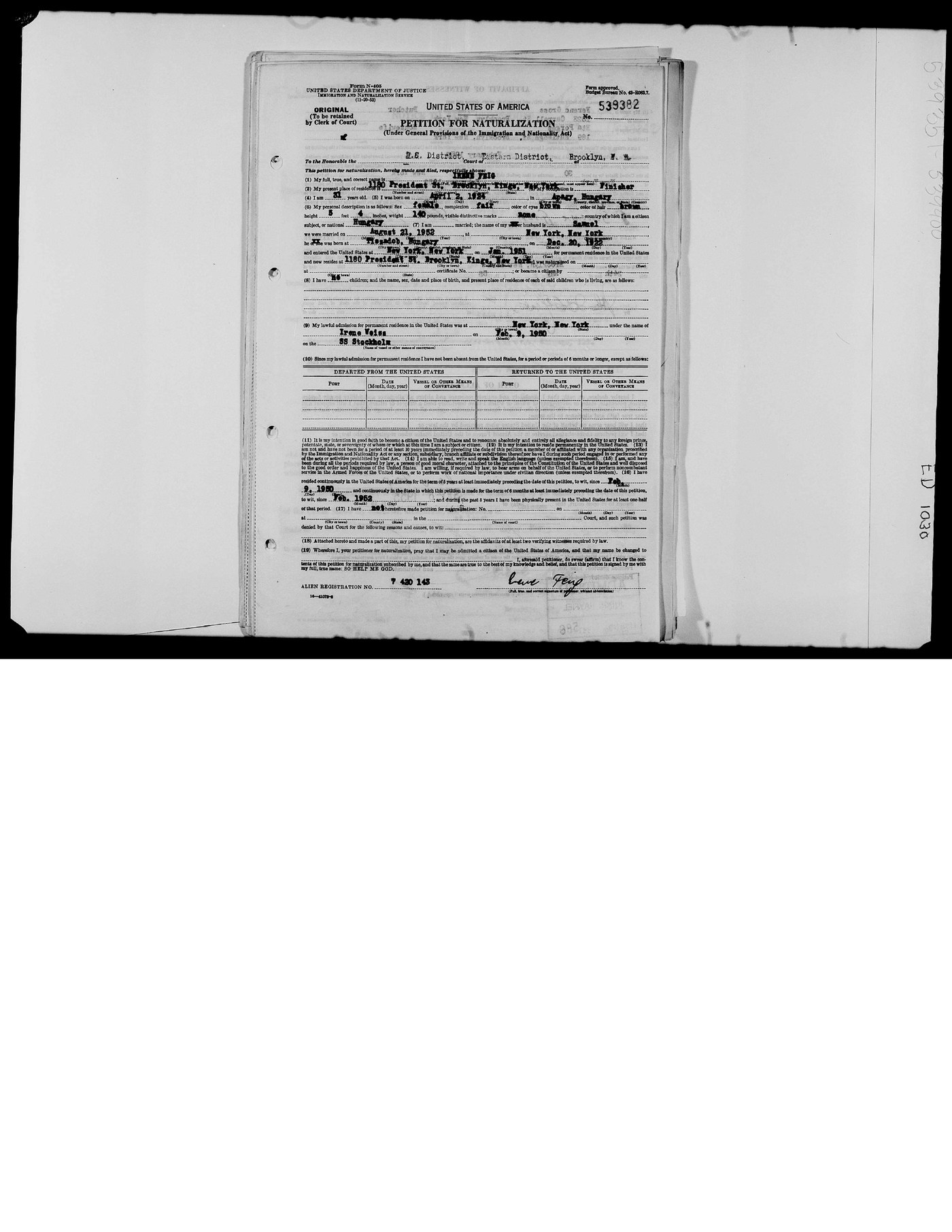
She met Laci, the boy from Tiszadob. They got engaged. They had nothing. They walked into a housewares store and bought three plates, three spoons, three forks, three cups — one for Tati, one for me, and one for a guest. After the wedding they paid the caterer by opening the gift envelopes one by one.

A well-to-do uncle offered to open a business for them in Chicago, to set them up near family. It would have been an easier life; they had almost no family in New York. They decided not to go. The Yiddishkeit, they felt, would be lost in Chicago. Better to stay poor in Brooklyn where their children could grow up religious. It was not, Menachem said, even a real question for them.

The important thing is to look back — to look back at the generation before you, to follow in their footsteps. Not to chase after whatever is new. Technology didn't mean anything to her. What matters is looking back at where you come from. — Irene Feig, as summarized by her son Menachem, 2014

She had no desire, ever, to return to Hungary. A murderous country, she called it, where the goyim murdered our people. After the war, when her brother Imre finally did return to their old house in Apagy, the principal of the public school — a friend he had known before the war — came by to try to befriend the family again. Imre wasn't interested. Neither was Irene.

She died in Brooklyn in 2013, at eighty-nine, having raised a family whose children and grandchildren live the life she chose to stay for. Of all the people in this document — of all the names and dates on this tree — Irene is the one everyone who is alive today remembers best. She is the person this family is closest to. Everything on this page that comes after 1944 starts with her survival.

· CHAPTER THREE ·

Simon & Rozalia — The House at Nyírbogát

Eleven children, a long marriage, and the grandparents before the war.

Simon Weisz — Shaul / Shmuel
— SIMON WEISZ —
Shaul · Shmuel
1860–1940
Rozalia Grósz — Fogel · Rachel
— ROZALIA GRÓSZ —
Fogel · Rachel
1871–1933

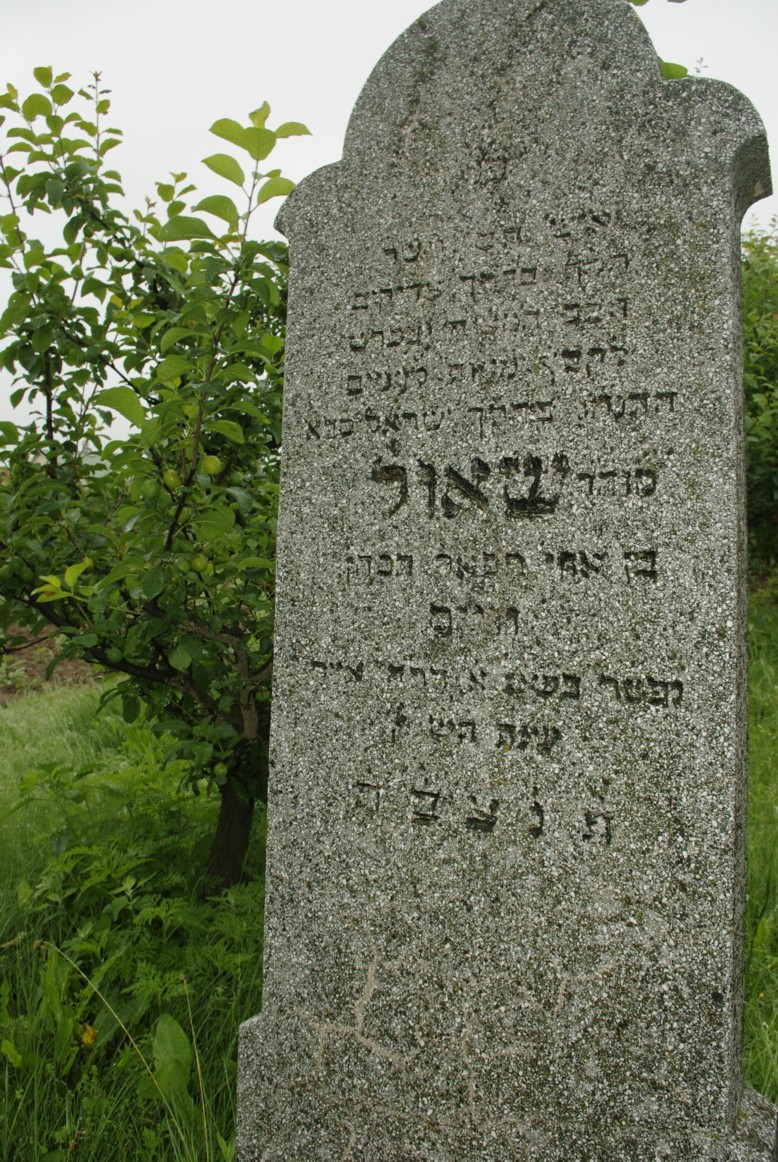
Simon Weisz — Shaul / Samuel in his Hebrew and civil variants — was born on 17 November 1860 in Petneháza, a village of a few hundred houses in Szabolcs-Szatmár-Bereg county. His parents Leopold Abraham "Lebli" Weisz and Pepi Pessil Schvarcz were both twenty-five when he arrived. Family records also show older siblings — Lajos (b. 1866), Izidor (b. 1871), Morris (b. 1879), and Roza (b. 1858, later settled in Budapest) — labeled in the Ancestry tree as Simon's half-siblings. The designation points to one of Simon's parents having had a first marriage before they met. The clearest evidence for this is Morris's surname: Weinberger, not Weisz, which strongly suggests a different father. Whether it was Leopold who was previously widowed or Pepi who was — and therefore which of these siblings share which parent with Simon — is not yet resolved in the records.

Some time before 1891, Simon married Rozalia Grósz — called also Róza Sara, Rachel, or in Yiddish affectionate "Fogel" (little bird). She was eleven years his junior. Their first daughter Giza was born in 1891 in Nyíregyháza and died the same year, less than a year old. Their second child — born 24 March 1892 in Nyírbogát, where the family had now moved — was a son: Leopold "Lipat" Weisz, Irene's father.

Over the next seventeen years, Simon and Rozalia would have more children, for a documented total of eleven — "five sons and six daughters," per Simon's Ancestry biography. We can name nine of them with dates and fates: Giza, Lipat, Hanni, Malvin, Regina, Szerena Sara, Dávid, Esther, and Ignácz Izeek. Two more — almost certainly sons who died in infancy or childhood and were never entered in the timeline records — remain unknown to us.

Of the nine we can name, two died as infants (Giza in 1891, Dávid at three days old in 1904). Three daughters died young, in their twenties and thirties, of illnesses whose nature has not yet been recovered from the records: Regina at twenty-nine, Hanni at thirty-four, Malvin at thirty-eight — all in the 1929–1935 window. Two daughters made it to America before the war and lived long American lives: Szerena Sara to Chicago (died 1979, age seventy-seven), Esther to Chicago and later Skokie (died 2003, age ninety-seven). Lipat and Ignácz Izeek are the other sides of that ledger — Lipat at Ebensee in 1945, Ignácz's fate still not confirmed.

Rozalia died on 9 March 1933 at sixty-one, in Nyírbogát. Simon died in 1940, aged eighty. Both were spared, by the timing of natural death, what came to the county four years later.

· CHAPTER FOUR ·

Aunt Esther — The Chicago Thread

The sister who left before it closed.

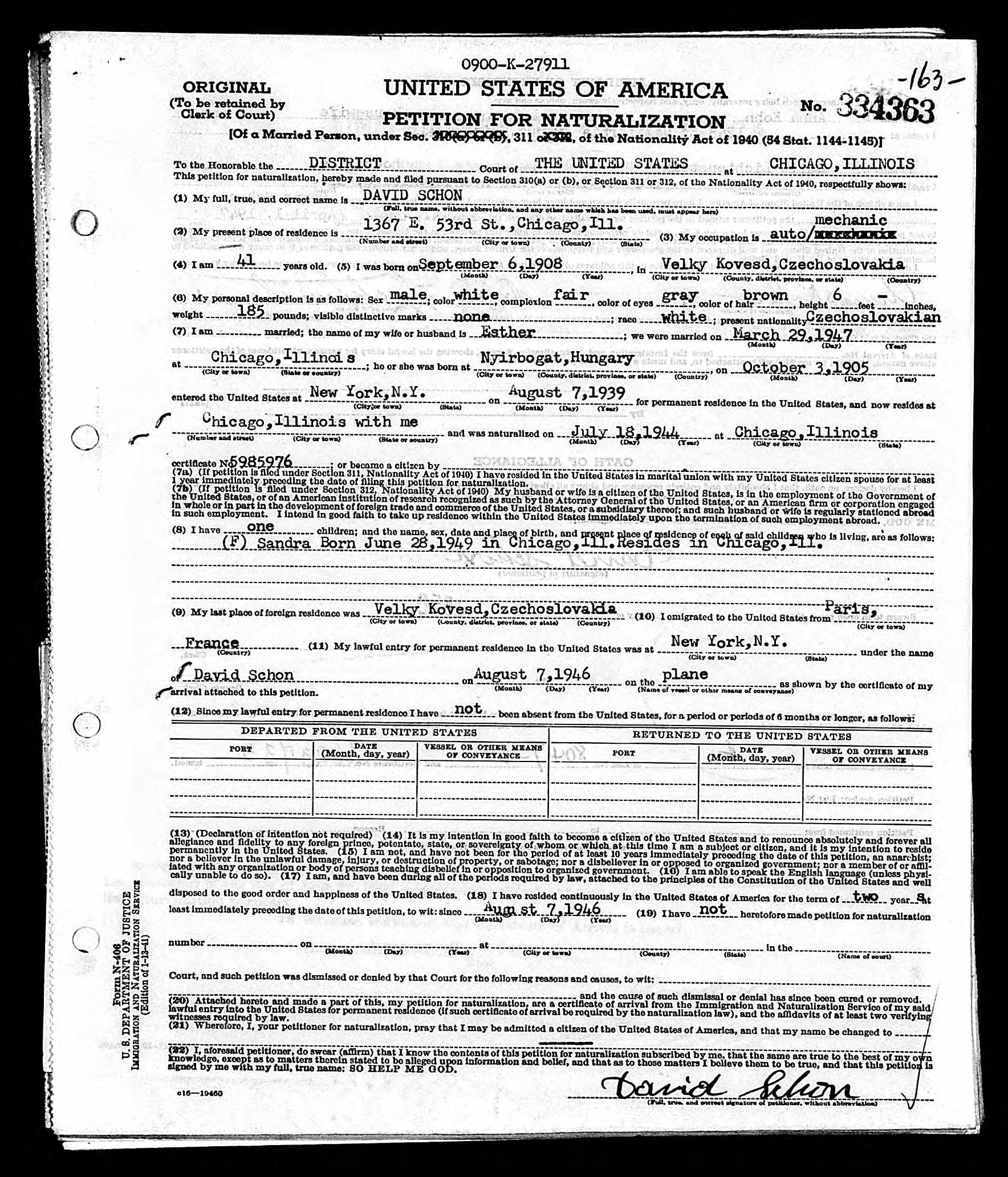
Esther Fogel — born Esther Weisz, 3 October 1905, the ninth of Simon and Rozalia's eleven children — left Hungary for the United States sometime before the war. She had lived with Simon and Rozalia in Nyírbogát, and Irene knew her well from the Sunday horse-and-buggy visits. By 1944 Esther was living in Chicago and was naturalized an American citizen there. The Fogel name came from her first husband, Jack Yeno Fogel, a Yeshiva bachur who enlisted in the American army. He died on 14 September 1944 in Lorraine, France, during the Allied advance — the family remembered it as D-Day, but the records place it in the fall campaign three months later. Either way, he did not come home.

In 1947 Esther remarried — David V. Schon, in Chicago — and had a daughter with him, born around 1948 or 1949. (That daughter, Irene recalled, was about one or two years old when Irene arrived in 1950.) David died on 1 January 1979. Esther outlived him by twenty-four years and died on 2 July 2003 in Skokie, Illinois, at the age of ninety-seven.

But it was Esther who kept Irene alive across the ocean — the packages from Chicago that reached the survivors' home in Sweden, the room she offered her niece when the boat from Europe docked in 1950, the aunt who opened her door to the survivor-girl of her older brother Lipat. When Irene later said that the most important thing was to look back and follow in the footsteps of the generations before — Esther was one of those footsteps.

Esther's older sister Szerena Sara (1902–1979) also made it to Chicago, married a Feldman, and lived her life there. The two surviving Weisz sisters built a post-war American life in the same city that had taken them in. A third possible survivor — Ignácz Izeek, born 1909 — has a birth record but no death record yet; his fate is one of the open gaps.
· CHAPTER FIVE ·

Regina — The Feldmans of Jákó

The other half of Irene's family — first cousins who became in-laws.

Regina — also Rivke — Feldman was born on 31 August 1892 in Jákó, a village in Szabolcs-Szatmár, to Elias Feldman (age thirty-two) and Miriam Grósz (age thirty). Miriam was also known as Amália. She was the older sister of Rozalia Grósz — the sister who had married Simon Weisz in Nyírbogát, twelve miles away, and whose son Lipat was born the same year as Regina: 1892.

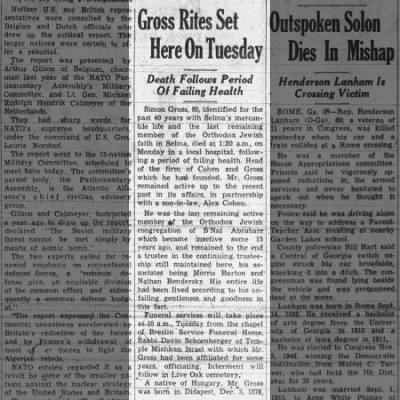
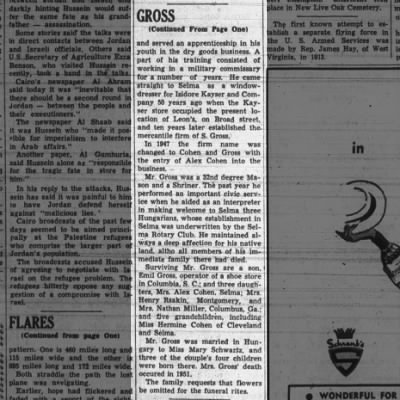
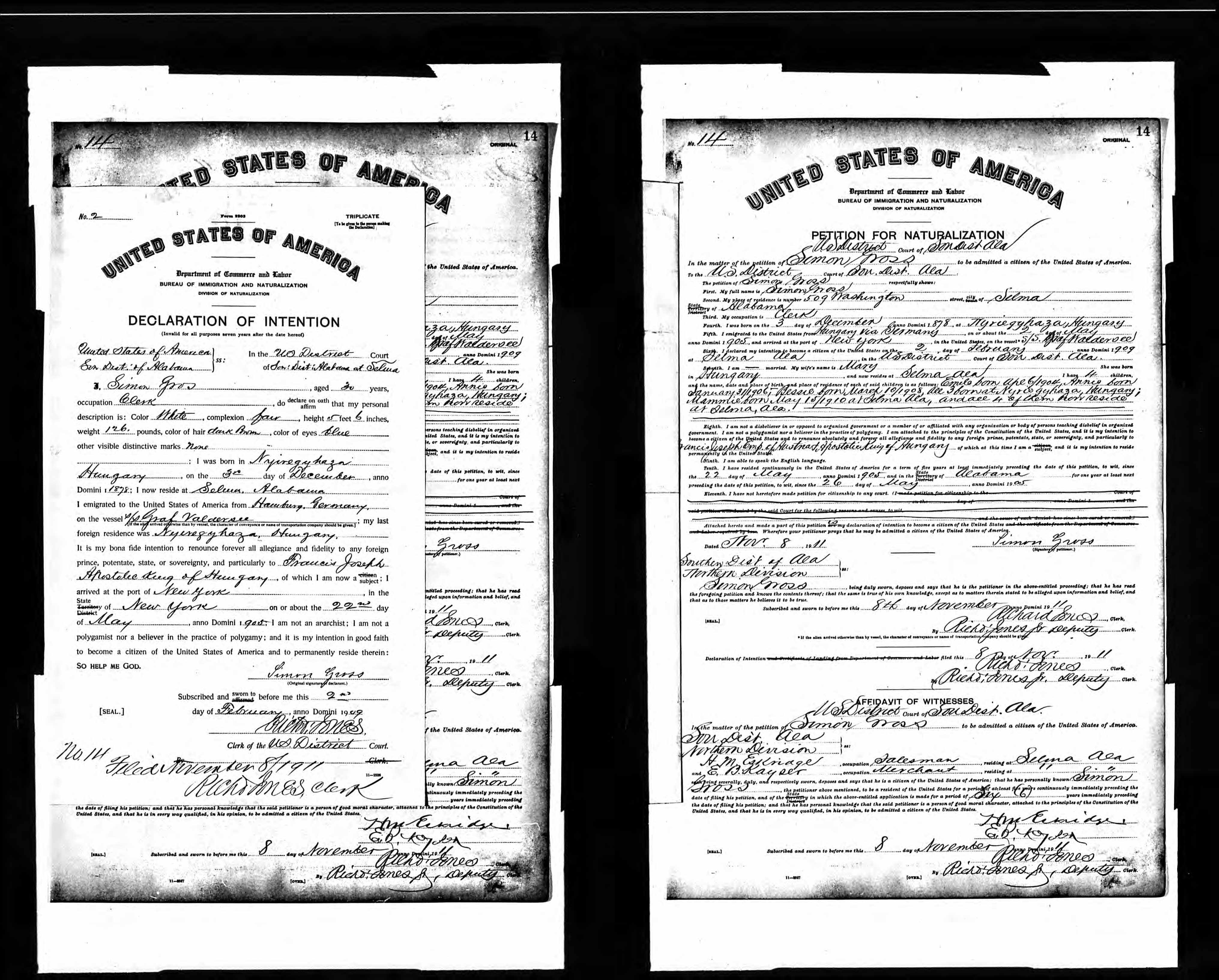
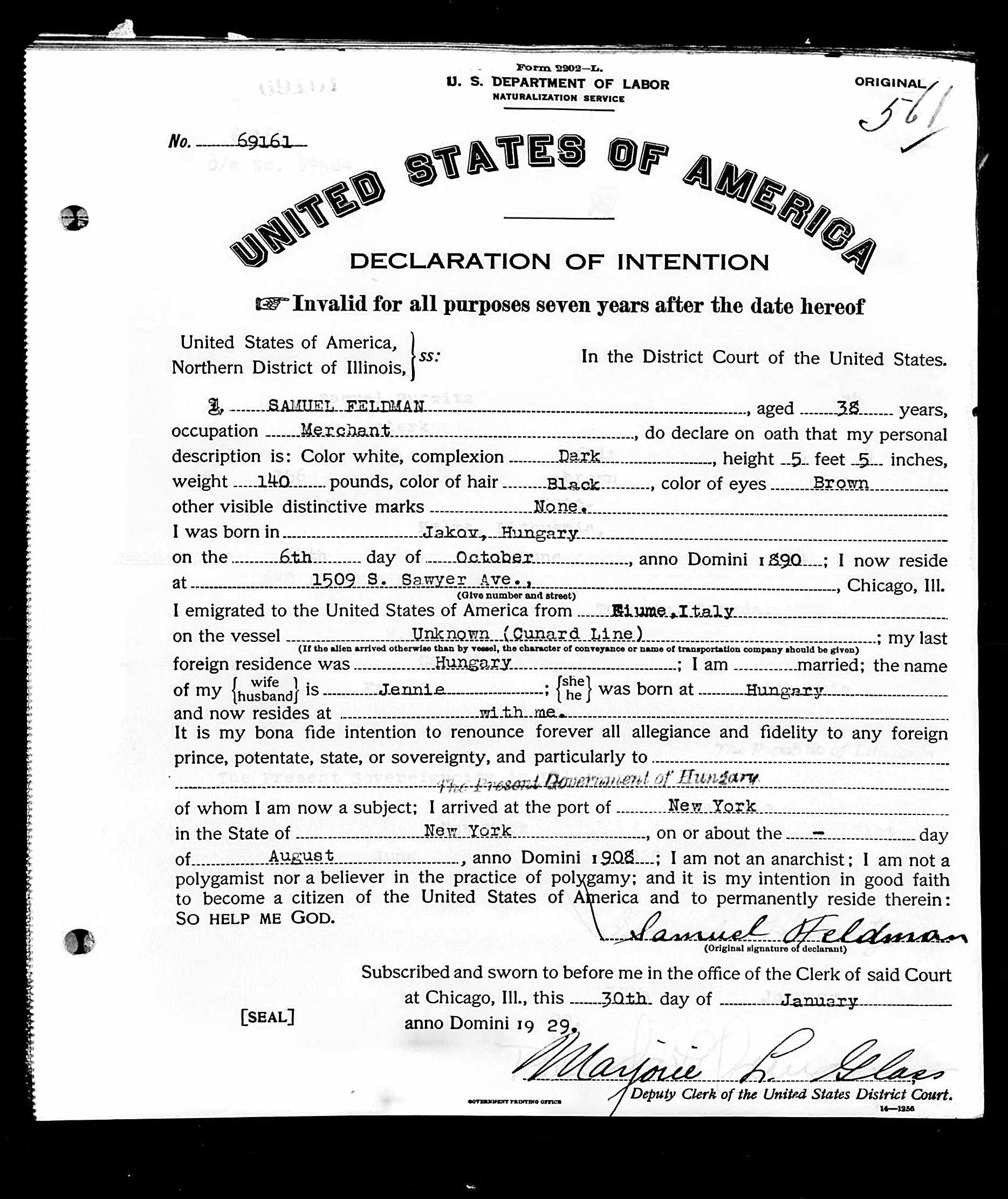
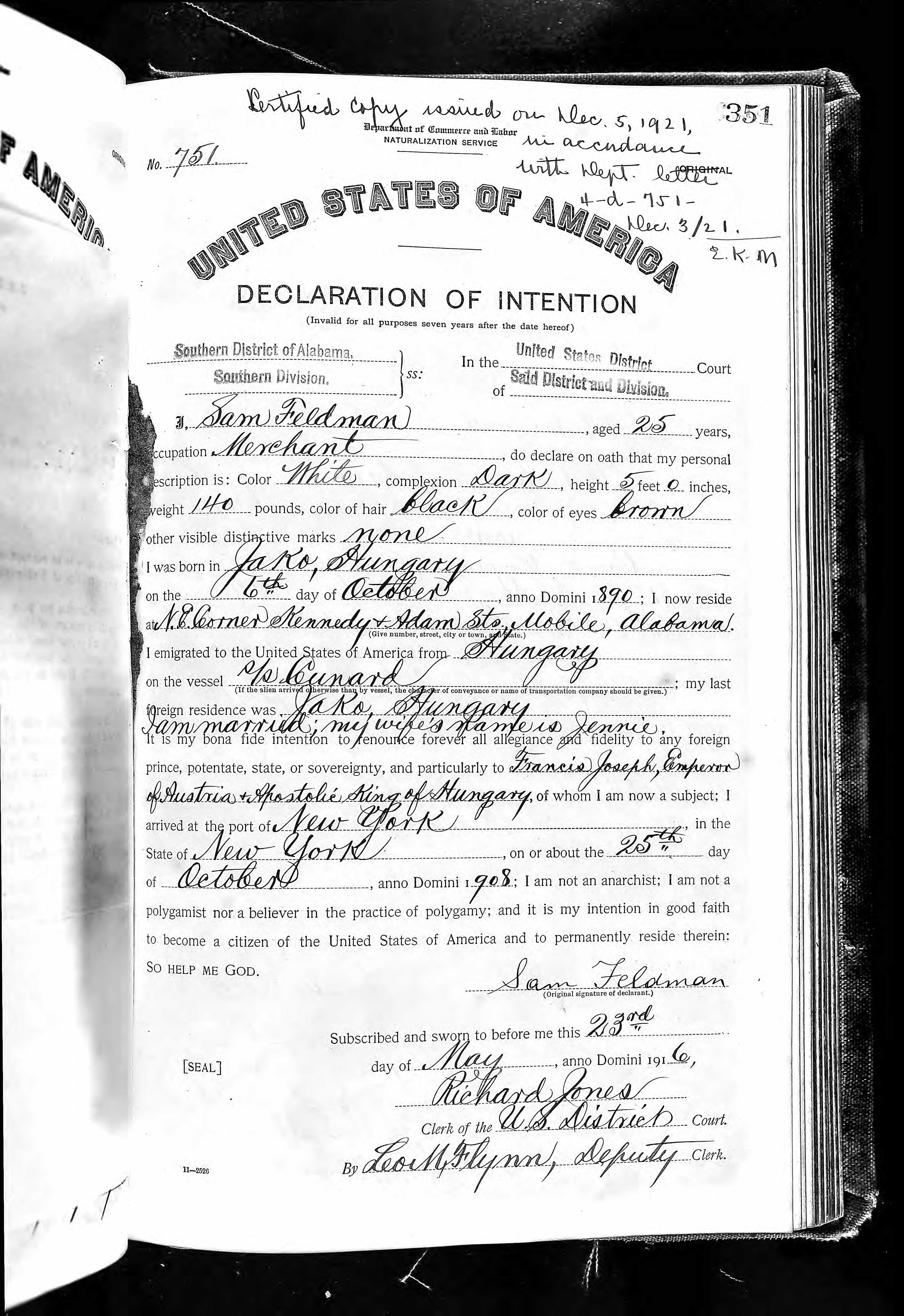
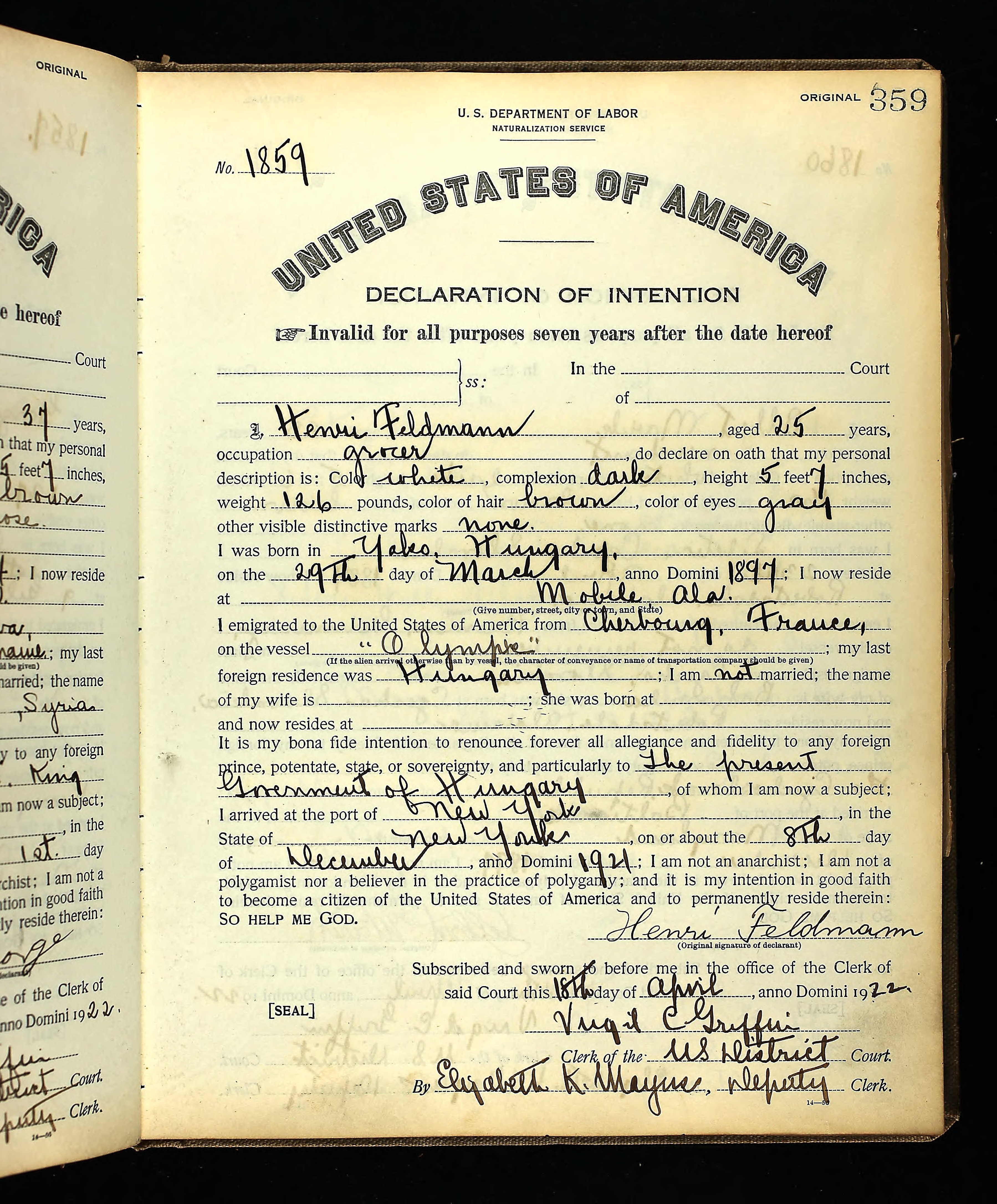
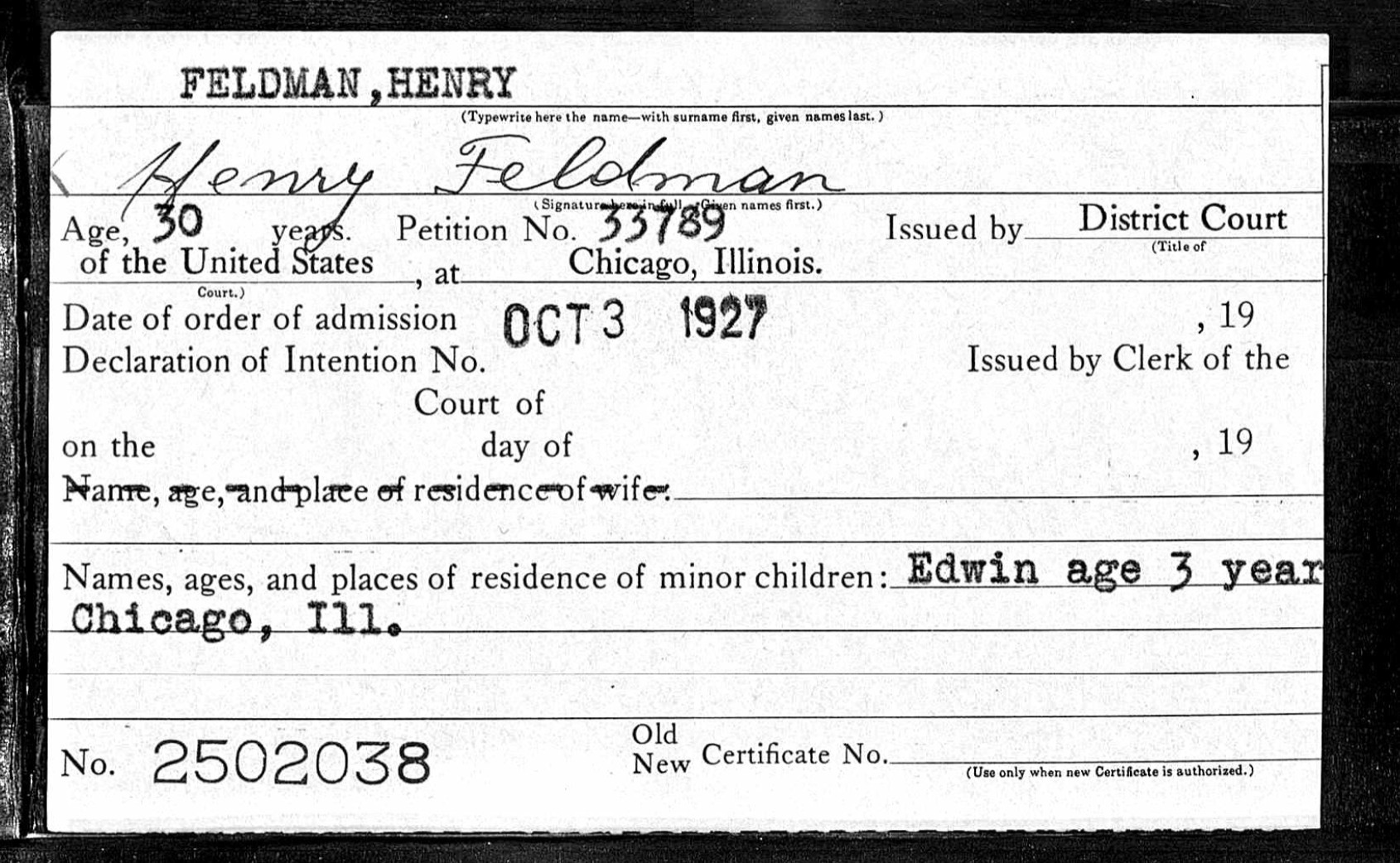
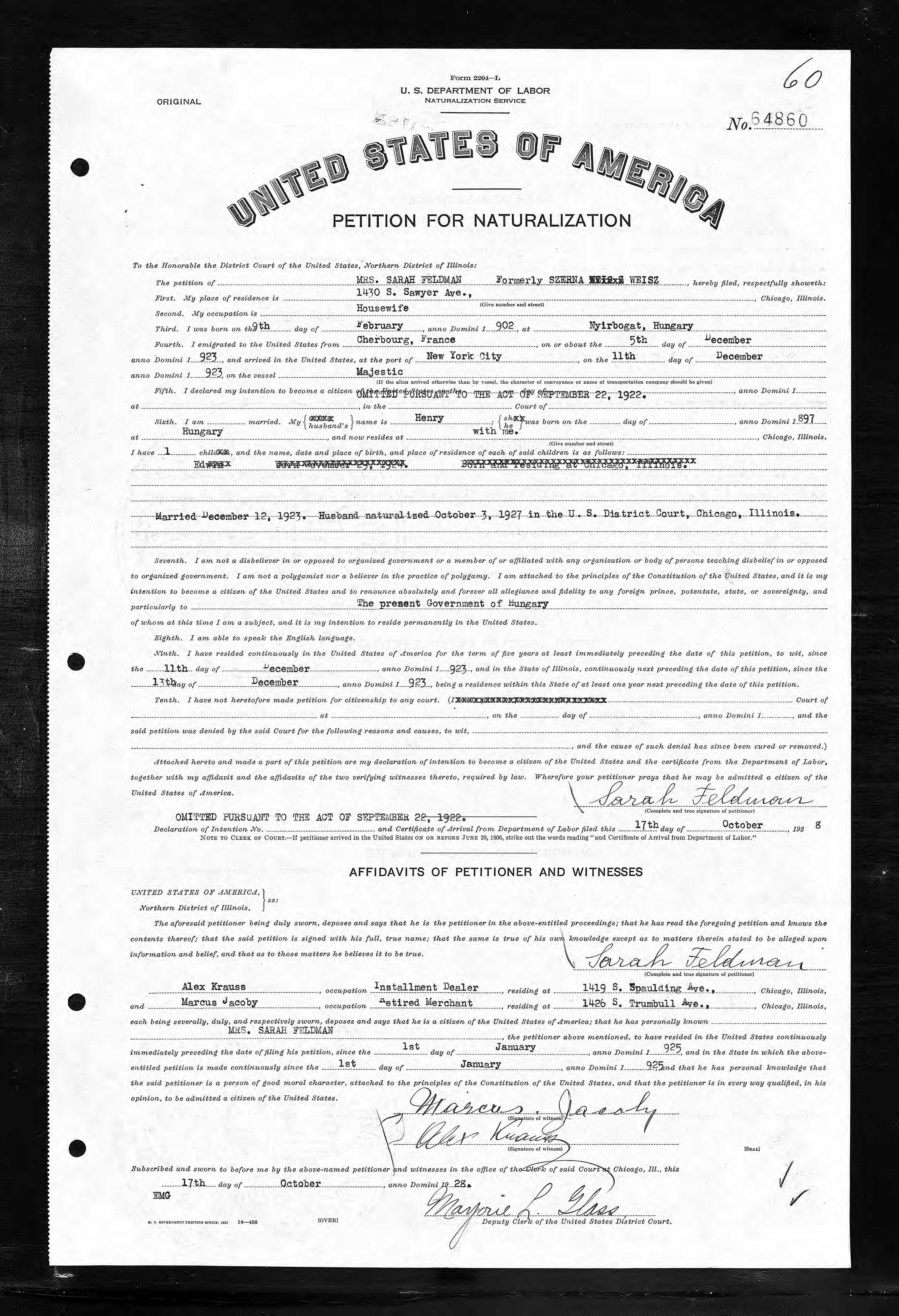
Regina grew up with six siblings. József, the eldest, died in 1899 in Kisvárda at the age of eleven. Two brothers made it to America before the war: Samuel Feldman, born 6 October 1890 in Jákó, emigrated to the United States and lived out his life in Skokie, Illinois, dying 5 November 1967; and Henry Hyman (Chaim) Feldman, born 28 March 1897 in Nyíregyháza, who settled in Chicago and lived to ninety-three, dying 16 December 1990 — three months after his nephew Laci died in Brooklyn. Three more siblings remained in Hungary: Bernát, Róza, and Ignácz. Ignácz was born 6 December 1894 in Jákó and was murdered in 1944; he is the most likely identity of the uncle Irene described being shot at the Auschwitz ramp helping his mother. The fates of Bernát and Róza are not yet recovered.

The parallel with the Weisz family is striking. Just as two of Simon & Rozalia's daughters (Esther and Szerena) settled in Chicago before the war, two of Elias & Miriam's sons (Samuel and Henry) did the same. When Irene arrived in America in 1949, she was coming to a city where she had both Weisz and Feldman relatives — two sides of the same extended family who had crossed the ocean a generation earlier.

Regina and Lipat married sometime before 1921 — their eldest son Imre was born in Apagy in August 1921. Irene followed in April 1924, and three more sons after her: Endre Chaim Shalom, Erno Eliyahu, and Jeno Shlomo Yehuda.

Her mother Miriam died in 1932, two years before anti-Semitism would sharpen. Regina herself was murdered in the deportations of 1944, fifty-two years old. Her husband Lipat survived the initial deportations and was transferred through the camp system to KZ Ebensee in Austria, where he died on 17 February 1945 — eighty days before liberation.

· CHAPTER SIX ·

Brooklyn, the early 1950s

Two survivors from two villages forty miles apart meet in a third country.

They were introduced, or reintroduced, in the Hungarian-speaking survivor community that had gathered in Brooklyn after the war. Laci was about thirty, Irene about twenty-six. They married in the early 1950s and became, on paper, Mordechai and Irene Feig. Their daughter Rivka — Rena on her birth certificate — was born 4 December 1956. Their son Menachem was born 4 October 1957 — eleven months later.

The home they built was, in every meaningful sense, the beginning of this family. Everyone pictured here who comes after Laci and Irene exists because two people from a world that was destroyed chose to build a new one in its place — and chose to build it, specifically, in a community that would raise their children religious.

Rivka — Rivka Rochel — married R' Laibe Schwartz and raised seven children: two daughters (Miriam, married Horowitz; Blimi, married Klein) and five sons (Aryeh, Moshe, Menachem, Mordechai, and Pinchus Schwartz). She passed away in December 2024, eleven years after her mother Irene, and three days before what would have been her sixty-eighth birthday. Her seven children and their own families carry the line forward.

· CHAPTER SEVEN ·

Today

Menachem and Fruma — and the six that came after.

Menachem married Fruma. Together they had six children, given in birth order: Yitzchak Yosef, Yehudah Leib, Eliyahu Shaul, Mordechai, Michal, and Aryeh. Some of the names carry the line forward: Mordechai for Zeidy Laci (Mordechai Eliezer), Eliyahu for Irene's brother Erno — murdered 1944 — and Shaul for Simon Weisz, the 2nd great-grandfather in Nyírbogát. Michal — fifth of the six — is the daughter who in 2014 sat her father down and recorded the story of his mother's life, without which most of Chapter Two would not be on this page.

Eli — Eliyahu Shaul, third of the six — is the one gathering the names and building this tree, so that his own children and the generations after will know what the names were and who stood behind the dates.

— IV —

The Eleven Children of Simon & Rozalia

Lipat's siblings — the household in Nyírbogát

— THE PARENTS —
Simon (Shaul) Weisz  ×  Rozalia Grósz
1860–1940 · 1871–1933 · married Nyírbogát · eleven children 1891–1909 (nine identified, two unknown)
1ST CHILD · 1891
Giza Weisz
1891 – 1891 · NYÍREGYHÁZA
Died before her first birthday
2ND CHILD · 1892
Leopold "Lipat" Weisz
likely Yehuda Leib
24 MAR 1892 – 17 FEB 1945 · KZ EBENSEE
Great-grandfather (Irene's father) · m. Regina Feldman · died 80 days before Ebensee's liberation
3RD CHILD · 1894
Hanni Weisz
m. Feldman
15 OCT 1894 – 22 AUG 1929 NYÍRBOGÁT
Died at 34 · same day as sister Regina
4TH CHILD · 1897
Malvin Weisz
20 JUL 1897 – 17 OCT 1935 (38)
Pre-war death in Szabolcs-Szatmár-Bereg
5TH CHILD · 1899
Regina Weisz
24 NOV 1899 – 22 AUG 1929 (29)
Died at 29 · same day as sister Hanni · a family tragedy whose cause we do not yet know
6TH CHILD · 1902
Szerena Sara Weisz
m. Feldman
9 FEB 1902 – JUL 1979 CHICAGO (77)
Emigrated to America · settled in Chicago
7TH CHILD · 1904
Dávid / David Weisz
24 JUL 1904 – 27 JUL 1904
Lived three days
8TH CHILD · 1905
Esther Weisz
later Fogel, then Schon
3 OCT 1905 – 2 JUL 2003 · SKOKIE, IL (97)
"Aunt Esther" · took in Irene in 1950 · lived to 97
9TH CHILD · 1909
Ignácz Izeek Weisz
B. 24 APR 1909 · NYÍRBOGÁT
Death date unknown · fate unresolved
2 UNACCOUNTED · ??
Names not yet recovered
— LIKELY INFANT OR CHILDHOOD LOSSES —
Simon's bio lists "five sons and six daughters" (11 total). We can identify 9 by name; the remaining 2, almost certainly sons who died young, are not in the timeline records.

Of eleven children born, at least two died as infants, three daughters died before forty, and two daughters emigrated to Chicago before the war — one of whom became Aunt Esther, the woman who received Irene off the boat. Two children from this household remain unidentified in current records.

· A FAMILY STORY ·

The Grósz Sisters

A discovery hiding inside Irene's family tree — her parents were first cousins.

Trace both of Irene's grandmothers back one generation and you find that they were sisters — both daughters of Ferencz Z. Grósz (1845–1922) and Hani Berger (1844–1894). Irene's paternal grandmother Rozalia and her maternal grandmother Miriam were Grósz girls from the same household, nine years apart.

Which means Irene's father Lipat and her mother Regina were first cousins. Both born in 1892. Both from villages twelve miles apart in the same Szabolcs county. They were keeping the line inside a family that had almost certainly been intermarrying for generations.

Ferencz Z. Grósz  ×  Hani Berger
1845 – 1922 · 1844 – 1894 · PARENTS OF THE TWO SISTERS
Miriam Grósz
also Amália · elder sister
1862 – 1932 · JÁKÓ
m. Elias Feldman
→ their daughter Regina Feldman (1892)
Rozalia Grósz
Róza Sara · Rachel · "Fogel" · younger sister
1871 – 1933 · NYÍRBOGÁT
m. Simon Weisz
→ their son Leopold "Lipat" Weisz (1892)
— THE NEXT GENERATION —
Lipat Weisz  ×  Regina Feldman
first cousins · both born 1892 · Irene's parents

This was not unusual in rural Hungarian Jewish life. The communities were small, the marriage pool was limited by religious observance and geography, and keeping property and ties inside an extended family was often the practical choice. There is more of the same pattern in the tree — Weisz daughters marrying Feldman men in more than one generation — which suggests the two families had been entwined for long before Lipat and Regina.

— V —

The Roster

Every known name, by branch

Klein / Goldstein

Tiszadob, Hungary

József Klein
TISZADOB · DATES UNKNOWN
Great-great-grandfather · father of Emanuel
Dinko Schoenberglikely Dincha / Dina
TISZADOB · DATES UNKNOWN
Great-great-grandmother · mother of Emanuel
Péter Goldstein
TISZADOB · DATES UNKNOWN
Great-great-grandfather · father of Lina and Gizella
Róza Krausz
TISZADOB · DATES UNKNOWN
Great-great-grandmother · mother of Lina and Gizella
Emanuel Klein
B. 1887 TISZADOB · MURDERED 1944 (57)
Great-grandfather (Laci's father) · Yad Vashem status "missing" · Page of Testimony
Lina Kleinnée Goldstein
B. 1879 TISZADOB · MURDERED 1944 (65)
Great-grandmother (Laci's mother) · 8 yrs older than Emanuel · had Laci at 43 · Page of Testimony
Gizella Goldsteinm. Ferenc Büchler
B. 1885
Lina's younger sister · great-great-aunt
Ilona Klein
B. 1912 · AUSCHWITZ APR 1944 (32)
Laci's older sister · eldest of the siblings
Jenő Klein"Jenő bácsi"
B. 27 SEP 1913 TISZADOB · SURVIVED
Laci's older brother · liberated at Theresienstadt · co-sponsor of the Tiszadob memorial
Laci KleinMordechai Eliezer · Mordechai Feig
B. 25 DEC 1922 TISZADOB · D. SEP 1990 BROOKLYN (67)
Zeidy · survived · name changed from Klein to Feig by a clerk at the American reception station · married Irene Weisz early 1950s

Weisz — Direct Line

Petneháza · Nyírbogát · Apagy

Martony Weisz
4th great-grandfather · father of Leopold Abraham
Sali Krausz
4th great-grandmother · mother of Leopold Abraham
Leopold Abraham Weisz"Lebli"
B. 1835 · PETNEHÁZA
3rd great-grandfather · Simon Weisz's father
Pepi Pessil SchvarczSchwarcz / Schvartz
1835 – 22 JUL 1915 NYÍRBOGÁT (80)
3rd great-grandmother · Simon Weisz's mother
Simon WeiszShaul / Samuel
17 NOV 1860 PETNEHÁZA – 1940 (80)
2nd great-grandfather (Irene's grandfather, Lipat's father) · 11 children with Rozalia · his name Shaul carried forward to Eli (Eliyahu Shaul)
Rozalia GrószRóza Sara · Rachel · "Fogel"
1871 – 9 MAR 1933 NYÍRBOGÁT (61)
2nd great-grandmother · younger Grósz sister · daughter of Ferencz & Hani
Leopold "Lipat" Weiszlikely Yehuda Leib
24 MAR 1892 NYÍRBOGÁT – 17 FEB 1945 KZ EBENSEE (52)
Great-grandfather (Irene's father) · died at KZ Ebensee (subcamp of Mauthausen, Austria) · 80 days before liberation · record in Arolsen Archives
Imre WeiszWeiss
19 AUG 1921 APAGY – 24 AUG 2001 BROOKLYN (80)
Irene's older brother · forced labor 1941/42 · left Hungary after 1956 revolution
Endre WeiszChaim Shalom
MURDERED 1944
Irene's younger brother · deported with the family from Apagy
Erno WeiszEliyahu ("Elye")
MURDERED 1944
Irene's younger brother · his name Eliyahu carried forward to Eli (Eliyahu Shaul)
Jeno WeiszShlomo Yehuda ("Slome Yide")
MURDERED 1944
Irene's younger brother · deported with the family from Apagy
Irene Weiszlater Irene Feig
2 APR 1924 APAGY – 2013 BROOKLYN (89)
Bobby · survived Auschwitz · hospital · Sweden · Chicago · Brooklyn · married Laci in Brooklyn early 1950s

Weisz — Lipat's Siblings

Simon & Rozalia's other children

Giza Weisz
1891 – 15 APR 1891 NYÍREGYHÁZA
Eldest · died less than a year old
Hanni Weiszm. Feldman
15 OCT 1894 – 22 AUG 1929 NYÍRBOGÁT (34)
Pre-war death · same day as sister Regina
Malvin Weisz
20 JUL 1897 – 17 OCT 1935 (38)
Pre-war death in Szabolcs-Szatmár-Bereg
Regina Weisz
24 NOV 1899 – 22 AUG 1929 (29)
Pre-war death · same day as sister Hanni
Szerena Sara Weiszm. Feldman
9 FEB 1902 – JUL 1979 CHICAGO (77)
Emigrated to America · Chicago
Dávid / David Weisz
24 JUL 1904 – 27 JUL 1904
Lived three days
Esther Weisz → Fogel → Schon"Aunt Esther"
3 OCT 1905 NYÍRBOGÁT – 2 JUL 2003 SKOKIE, IL (97)
Chicago aunt who took in Irene in 1950 · 1st husband Jack Yeno Fogel killed in France 1944 · 2nd husband David V. Schon 1947–1979
Ignácz Izeek Weisz
B. 24 APR 1909 NYÍRBOGÁT · ??
Death date unknown · fate unresolved

Feldman

Jákó · Nyíregyháza · then Chicago & Skokie

Elias Feldman
B. 1860
Great-great-grandfather · Regina's father · death date unknown
Miriam Grószalso Amália
1862 – 1932 HUNGARY (70)
Great-great-grandmother · elder Grósz sister · daughter of Ferencz & Hani · Irene's testimony places her at Auschwitz 1944, contradicting the 1932 Ancestry date
József Feldman
1888 – 12 MAR 1899 KISVÁRDA (11)
Regina's eldest brother · died a child
Samuel Feldman
6 OCT 1890 JÁKÓ – 5 NOV 1967 SKOKIE, IL (77)
Regina's brother · emigrated to America before the war · lived and died in Skokie, Illinois
Regina FeldmanRivke
31 AUG 1892 JÁKÓ – 1944 (52)
Great-grandmother · m. Lipat Weisz · first cousins through the Grósz line · murdered 1944
Ignácz Feldman
6 DEC 1894 JÁKÓ – 1944 (49)
Regina's brother · most likely the uncle Irene saw shot at the Auschwitz ramp
Henry Hyman FeldmanChaim
28 MAR 1897 NYÍREGYHÁZA – 16 DEC 1990 CHICAGO, IL (93)
Regina's brother · emigrated to America before the war · lived and died in Chicago · died three months after Laci
Bernát Feldman
Regina's brother · dates and fate not yet recovered
Róza Feldman
Regina's sister · dates and fate not yet recovered · the only confirmed Feldman sister of Regina

Grósz / Berger

deeper ancestry · shared through both Irene's grandmothers

Samuel Moshe Grósz
4th great-grandfather · Ferencz Z. Grósz's father
Mihatz Grószalso rendered Mihaly
4th great-grandmother · Ferencz Z. Grósz's mother
Aaron Berger
4th great-grandfather · Hani Berger's father
Rakhel Kepes Berger
4th great-grandmother · Hani Berger's mother
Ferencz Z. Grósz
1845 – 1922 (77)
3rd great-grandfather · shared ancestor through both of Irene's grandmothers
Hani Berger
1844 – 1894 (50)
3rd great-grandmother · died young · never met grandson Lipat

Feig — America

New York · Brooklyn · Suffern

Rivka FeigRivka Rochel · "Rena" · m. R' Laibe Schwartz
B. 4 DEC 1956 NYC · D. DEC 2024 (67)
Laci and Irene's eldest · Menachem's older sister · seven children · called Rivka in the family
Menachem Feiglegal name Marvin · called Menachem his whole life
B. 4 OCT 1957 NYC
Laci and Irene's son · Rivka's younger brother · conducted 2014 interview about his mother's life
Fruma Feig
Married to Menachem · mother of six
Yitzchak Yosef Feig
1st of Menachem & Fruma's six children
Yehudah Leib Feig
2nd of the six
Eliyahu Shaul Feig"Eli"
3rd of the six · Eliyahu for great-uncle Erno Weisz · Shaul for 2nd great-grandfather Simon Weisz
Mordechai Feig
4th of the six · named for Zeidy Laci (Mordechai Eliezer)
Michal Feig
5th of the six · conducted the 2014 interview with her father Menachem that preserves Irene's story
Aryeh Feig
6th of the six · youngest

Schwartz — Rivka's Children

Rivka (Rivka Rochel, called Rena in civil records) and R' Laibe Schwartz's seven children

R' Laibe Schwartz
Rivka's husband · father of the seven Schwartz children
Mrs. Miriam Horowitz
Rivka's daughter · m. Horowitz
Mrs. Blimi Klein
Rivka's daughter · m. Klein
R' Aryeh Schwartz
Rivka's son
R' Moshe Schwartz
Rivka's son
R' Menachem Schwartz
Rivka's son
R' Mordechai Schwartz
Rivka's son
R' Pinchus Schwartz
Rivka's son
— VI —

Source Documents

What this tree is built on

Ancestry tree screenshot - Menachem Feig's direct ancestry
Menachem's ancestry · direct line
Ancestry tree screenshot - Irene Feig's deeper ancestry with Grósz/Berger/Weisz 4th-great-grandparents
Irene's deeper ancestry · 4th great-grandparents via Grósz and Berger lines

Primary Sources

  • Ancestry.com trees — Weisz, Feldman, Grósz, Fogel, Berger, Schvarcz, Krausz lines; profiles for Simon Weisz, Leopold "Lipat" Weisz, Esther Fogel, Regina Feldman, Irene Feig
  • Yad Vashem Pages of Testimony — Emanuel Klein, Lina Klein, Ilona Klein; sister Gizella Büchler noted
  • 2014 interview with Menachem Feig, conducted by his daughter Michal — oral history of Irene Feig's life in Apagy, deportation, Sweden, Chicago, Brooklyn (private family recording)
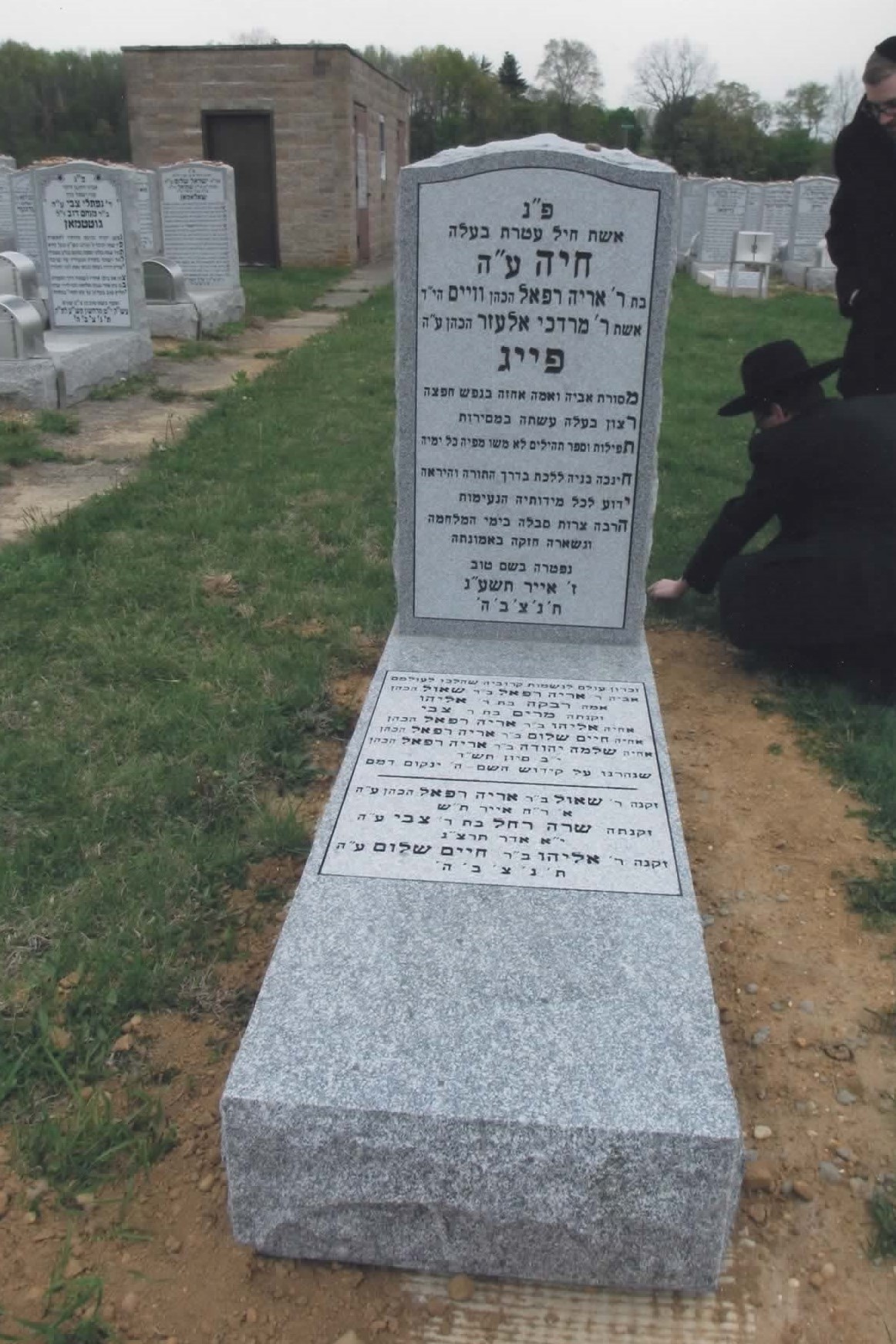
  • Tiszadob cemetery memorial plaque — photographed (shown in Chapter 1) · lists Kohn Icu, Kohn Ilus, Büchler Lajos, Klein Jenő, Klein Laci · cemetery documented at ESJF
  • Arolsen Archives / KZ Ebensee records — placing Leopold "Lipat" Weisz's death 17 Feb 1945
  • Family memory — Menachem Feig, Eli Feig

A comprehensive list of archives, databases, and memorials — with direct links — is in Section VIII: Sources & Further Research.

— VII —

What we're still searching for

The open questions — a map of where to dig next

Birth dates for the three brothers

Endre (Chaim Shalom), Erno (Eliyahu), Jeno (Shlomo Yehuda)

Bernát & Róza Feldman — unknown fates

two of Regina's siblings with no recovered records

Samuel & Henry Feldman — the American Feldman branch

the parallel Chicago thread on Regina's side
  • Samuel Feldman: 1890 Jákó → 1967 Skokie, IL — did he have a family? descendants?
  • Henry Hyman (Chaim) Feldman: 1897 Nyíregyháza → 1990 Chicago, IL — family? descendants?
  • If descendants exist, they are second cousins of Menachem & Rivka
  • Chicago naturalization records 1920s–1940s
  • Cook County marriage & death records

Simon's older siblings — prior marriage mystery

why are Lajos, Izidor, Morris, Roza labeled half-siblings?
  • Morris's surname is Weinberger, not Weisz — different father
  • Leopold Abraham "Lebli" Weisz likely had a first marriage before Pepi
  • OR Pepi Pessil Schvarcz had a first marriage to a Weinberger
  • Hungarian marriage registry 1850–1859 for Petneháza / nearby villages
  • Would reveal Simon's full extended family structure

The two missing Weisz children

Simon's bio says 11 children · we can name 9
  • "Five sons and six daughters" — Simon's Ancestry biography statement
  • Identified: Giza, Lipat, Hanni, Malvin, Regina, Szerena, Dávid, Esther, Ignácz (9)
  • Missing 2 — almost certainly sons who died young
  • Nyírbogát / Nyíregyháza vital records for 1893–1910
  • Any Weisz children of Simon and Rozalia not yet identified

Miriam Grósz Feldman's true death

the Ancestry date of 1932 contradicted by Irene's testimony
  • Irene said her mother's mother — a widow — lived with them and was shot at Auschwitz in 1944
  • The Ancestry tree gives Miriam's death as 1932
  • Most likely the 1932 date is wrong and Miriam survived until 1944
  • Yad Vashem Page of Testimony for Miriam Grósz Feldman, murdered 1944
  • Elias Feldman's death date (shown as just "b. 1860") also unresolved

Ignácz Feldman — the uncle at the ramp

the man who tried to help his mother down from the cattle car
  • Regina's brother · b. 6 Dec 1894 Jákó · d. 1944
  • Irene said "the uncle — the grandmother's son" was shot with her on arrival
  • Ignácz is the strongest candidate · confirmation via Yad Vashem PoT
  • Did he have a family? His children may have been the Feldman cousins across the street in Apagy

Esther's daughter

born ~1948-1949 in Chicago · Esther Fogel's daughter
  • Daughter of Aunt Esther (née Weisz) and David V. Schon
  • Would now be in her late seventies, likely still living
  • Grew up in Chicago / Skokie
  • May have children of her own — another line of living cousins

Laci's arrival and the name change

the clerical moment when Klein became Feig
  • Arrival port & date — likely 1946–1950
  • Ship manifest still under Klein, Laci or Klein, László
  • Landing papers showing the transition to "Feig"
  • HIAS files — Castle Garden, Marseilles Hotel, or Ellis Island annex
  • Naturalization papers — to confirm the legal name under which he spent his life

Jenő Klein's path after 1945

liberation at Theresienstadt · then?
  • Did he come to America? Stay in Europe? Go to Israel?
  • Arolsen Archives — ITS records
  • Descendants, if any

Ignácz Izeek Weisz

the ninth Weisz child · no death record

The two Aug 1929 deaths

Hanni (34) and Regina (29) died the same day
  • 22 August 1929 · Nyírbogát
  • Epidemic? Accident? Family tragedy whose nature we do not know
  • Hungarian civil death registry for that date
  • Local newspaper Szabolcsi Hírlap August 1929

Henry Hyman Feldman in America

Regina's long-lived brother (1897–1990)
  • Where in America did he settle?
  • Did Irene stay in touch with him after Brooklyn?
  • Descendants — likely still alive

The Büchlers — Gizella's line

Lina's sister · did any of them survive?

Hebrew names & yahrzeits

for saying kaddish properly
  • Emanuel Klein — Hebrew name + exact yahrzeit
  • Lina Klein — Hebrew name + exact yahrzeit
  • Ilona Klein — Hebrew name
  • Lipat — confirm Yehuda Leib
  • Regina — confirm Rivke · yahrzeit
  • Irene — Hebrew name
  • Simon "Shaul" — yahrzeit 1940

The Grósz cousin on Lee Avenue

the butcher shop reunion, 1950 Williamsburg
  • The cousin was a Grósz per Menachem's interview — surname confirmed
  • Which branch of the Grósz family? Descendant of Ferencz & Hani?
  • Williamsburg kosher butcher directories 1950
  • Would open another branch of living American cousins

Deeper Grósz / Berger / Weisz roots

the 4th great-grandparents
  • Dates for Martony Weisz & Sali Krausz
  • Dates for Samuel Moshe Grósz & Mihatz
  • Dates for Aaron Berger & Rakhel Kepes Berger
  • Pepi Pessil Schvarcz's parents · Petneháza Schvarcz family
  • Hungarian civil registry for Szabolcs & surrounding counties

Name origins for Menachem & Fruma's children

naming patterns across the six
  • Yitzchak Yosef — after whom?
  • Yehudah Leib — after whom? (not Lipat)
  • Mordechai — for Zeidy Laci, whose full Hebrew name was Mordechai Eliezer (confirmed)
  • Eliyahu Shaul — for Erno Weisz and Simon Weisz (confirmed)
  • Michal & Aryeh — after whom?
  • May lead to other relatives not yet on the tree, possibly from Fruma's side