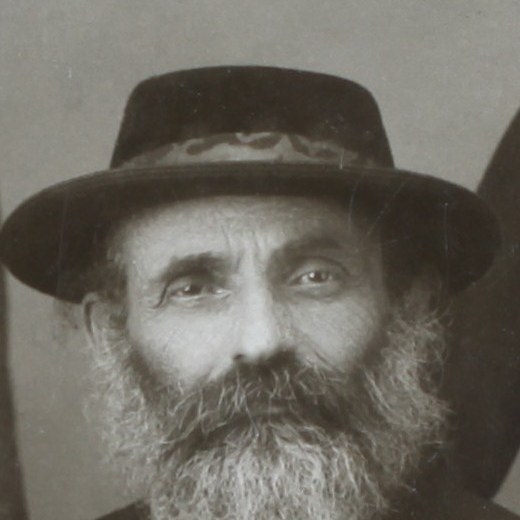
Samuel Weisz — Shaul in his Hebrew variant, Samuel in the civil record — was born on 17 November 1860 in Petneháza, a village of a few hundred houses in Szabolcs-Szatmár-Bereg county, in the sandy Nyírség plain of northeastern Hungary. His parents, Lebli Weisz and Pepi Pessil Schvarcz, were both twenty-five when he arrived. He was one of at least six children: an elder sister Roza who later settled in Budapest, brothers Lajos, Izidor, Herman, and Mendel — Herman raising twenty children of his own across two marriages, quietly becoming one of the largest Weisz baal-habatim in the county.
By the time he reached his late twenties, Samuel had moved the seventeen miles south from Petneháza to Nyírbogát, where he would establish his household. On 8 May 1890, in the village of Jákó three kilometers away, he married Roza "Sara Rochel" Grósz, daughter of Ferencz Grósz and Háni Berger. The 1890 marriage register survives in the Hungarian state archives — a single line of clerical Hungarian recording the joining of the Weisz and Grósz lines that would, two generations later, produce Bobby Irene.
Samuel and Roza had nine children in Nyírbogát between 1891 and 1908. Two died as babies: Giza in infancy 1891, Dávid at three days old in 1904. Three died as adults before the war: Hanni at twenty-five in 1919, Regina at twenty-nine in 1929, Malvina at thirty-eight around 1935. The four who lived to face what came after — Lipot, Sarah Szerena, Esther, and Ignácz — would scatter across Hungary and America. Lipot, the eldest son, settled in nearby Apagy and raised five children there, the youngest of whom was Bobby. Sarah Szerena emigrated to Chicago in 1923 and married her first cousin Hymie Feldman the day after her ship docked. Esther followed in 1939 with her first husband Jack Fogel, three weeks before the Nazi invasion of Poland sealed off the door behind her. Ignácz remained in Hungary; his fate is not yet documented. (This breakdown is corrected in v3.69 against Esther's 1980 letter, which lists Hanni among the seven children who grew up — she had married and had a child before her early death at 25.)
Samuel's vocation, by the testimony of his daughter Esther and his granddaughter Irene, was teaching — he was the principal of the local Jewish school in Nyírbogát. Civil records label him cipész — shoemaker. Irene rejected this categorically; she said her father Lipot would never have allowed Shaul to be remembered as a tradesman. The reconciliation Irene offered: Shaul may have sold shoes informally from his home porch, which is likely how the bureaucratic label arose. The vocation was teaching, not shoemaking.
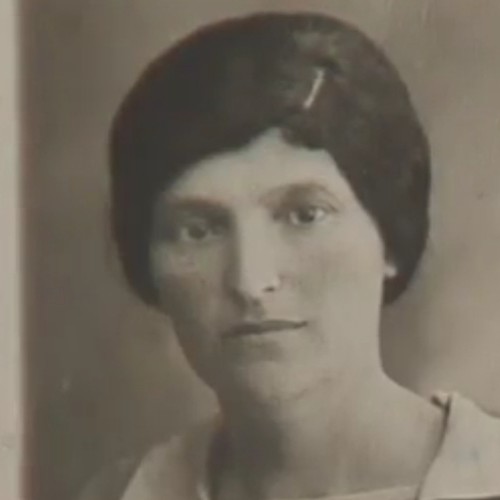
Roza died on 9 March 1933, age sixty-two, of liver cancer (májrák) at the family house in Nyírbogát. She was, by Irene's own account to her granddaughter Sandra, "a quiet little lady." Samuel outlived her by seven years. Sometime between 1933 and 1940, he remarried: his second wife, named on his 1940 death certificate, was Frida Schwartz. Her fate after May 1940 is unknown; she is presumed to have been deported with the rest of the Hungarian community in May 1944.
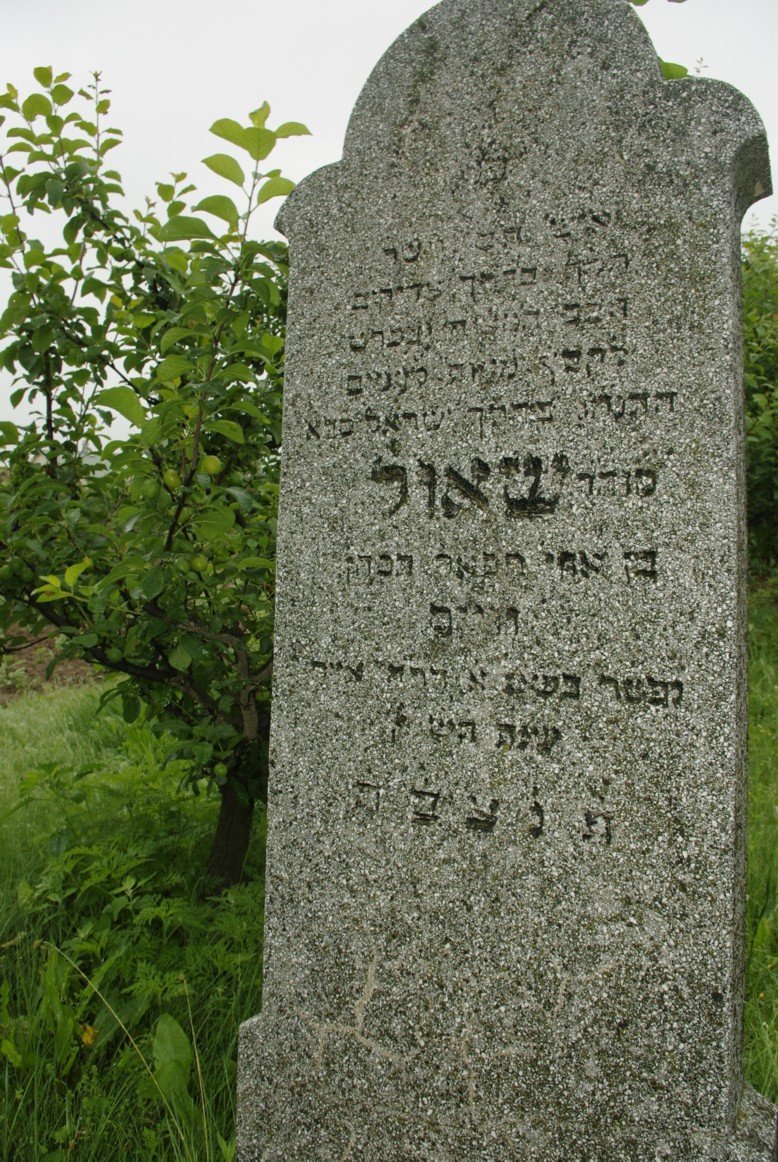
Samuel himself died on 7 May 1940, of stroke (agyszélhűdés), at György Hospital in Békéscsaba — two hundred kilometers south of Nyírbogát, far from his home. He was seventy-nine. His Hebrew yahrzeit is 1 Rosh Chodesh Iyar (30 Nisan 5700), the date carried on the family yahrzeit list to this day. He was buried in the Nyírbogát Jewish cemetery, where his matzeiva still stands. The inscription reads שאול בן אריה רפאל הכהן — Shaul son of Aryeh Refael HaKohen — the priestly designation intact in stone, carried forward through his son Lipot, through his grandson Imre, through his great-grandson Eli Feig (Eliyahu Shaul, named for him), on the family yahrzeit list to this day. A registrar's pen in Vienna in 1787 had once renamed his Cohn ancestors as Weiss; it did not change a single thing about the kehunah.
Samuel and Roza were both spared, by the timing of natural death, what came to the county four years later. Of the seven children of their household who reached adulthood, three would not survive the war that came after both their parents were already in the ground.